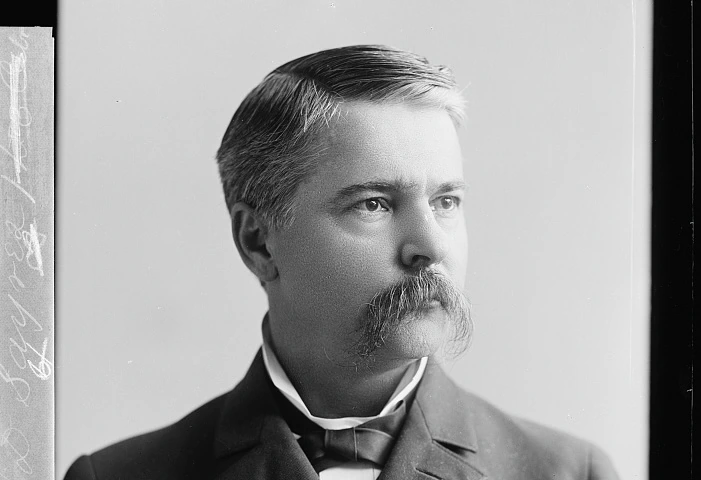
Joseph D. Sayers (1841–1929) served as the 22nd Governor of Texas from 1899 to 1903. A schoolteacher turned lawyer turned soldier, Sayers spent fourteen years in the U.S. Congress before entering the governorship as one of the most experienced officeholders in the state — and one of the last of the Civil War generation to hold its highest office.
His governorship coincided with a time of natural disaster, economic transition, deepening racial segregation, and the beginnings of the regulatory era that would define his successors.
Early Life and Civil War Service
Joseph Draper Sayers was born on September 23, 1841, in Grenada, Mississippi, the son of David Sayers, a physician. In 1851 the family moved to Bastrop, Texas, where the younger Sayers attended the Bastrop Military Institute from 1852 to 1860.
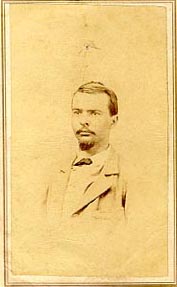
When the Civil War broke out, Sayers enlisted in the Fifth Regiment, Mounted Volunteers, Confederate States Army. He rose to the rank of major by 1864 and was assigned to the staff of General Thomas Green. He was paroled at Meridian, Mississippi, on May 10, 1865.
Returning to Bastrop, Sayers supported himself as a schoolteacher while studying law at night. He was admitted to the bar in 1866 and practiced for a decade in partnership with George W. Jones. On March 5, 1868, he married Ada Walton in Bastrop. She died on February 25, 1871.
Political Rise
Sayers entered politics during the Democratic resurgence that followed Reconstruction. He represented the Bastrop district in the Texas Senate during the 13th Legislature in 1873, serving at a time when Democrats were dismantling the policies of the Republican Reconstruction government. From 1875 to 1878 he chaired the state Democratic executive committee, presiding over the party conventions of 1876 and 1878, and in 1879 he was elected lieutenant governor under Oran Roberts.
On February 20, 1879, Sayers married Orline Walton, the sister of his first wife. Governor Roberts and his wife gave the couple a wedding reception at the Governor’s Mansion. The couple apparently had no children.
In 1884, Sayers won election to the U.S. House of Representatives, where he would serve seven consecutive terms representing districts in central Texas. In Congress, he sat on the committees on naval affairs and appropriations. Among his notable achievements was securing long-delayed federal payment for Texas Rangers who had served on the Indian frontier, a cause that had languished for years.
By the late 1890s, Sayers was one of the most experienced officeholders in the state. His 1898 gubernatorial campaign drew the backing of Edward M. House, the behind-the-scenes Democratic kingmaker who had already helped elect Governors Hogg and Culberson and would later become Woodrow Wilson’s closest adviser. With House’s support, Sayers defeated Martin M. Crane in the primary and won the general election comfortably, taking office on January 17, 1899.
Governorship: A Succession of Disasters
Sayers’s two terms were marked by an extraordinary run of calamities. In 1899 alone, the state penitentiary at Huntsville was destroyed by fire, severe flooding struck the Brazos River valley, and the Rio Grande City Race Riot underscored continuing tensions along the border. Drought and boll weevil infestations devastated the cotton economy across much of the state.
The defining event of his governorship — and one of the defining events of Texas history — came on September 8, 1900, when a hurricane struck Galveston, killing between 6,000 and 8,000 people on the island and as many as 12,000 along the coast. It remains the deadliest natural disaster in the history of the United States.
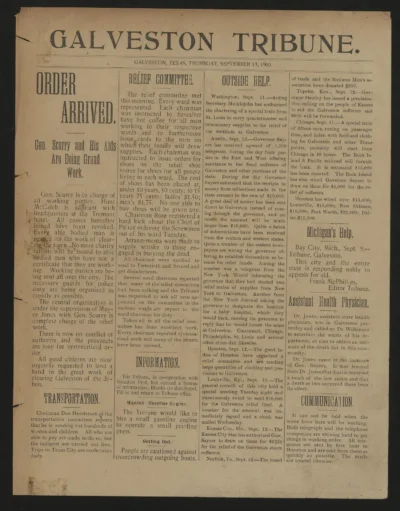
Sayers coordinated the state’s relief effort, managing the collection and distribution of millions of dollars in donations that poured in from across the country and abroad — including contributions from the Mexican Congress and from Germany. Contemporary and later accounts credited him with administering the relief funds honestly and fairly.
The hurricane’s aftermath also reshaped Texas governance in a lasting way. In 1901, Sayers appointed the first members of a commission form of government for Galveston, replacing the city’s incapacitated municipal government with a small appointed body. This commission model — born of emergency — attracted national attention and was adopted by more than 500 American cities over the following two decades.
The same year, Sayers received President William McKinley in Austin, the first visit to the Texas capital by a sitting president.
Governing Philosophy and Legislative Program
Sayers’s addresses to the Legislature outlined a philosophy of limited but vigorously enforced government. He insisted that the state could not “till the field, nor operate the factory, nor conduct commerce,” but held that within its proper sphere the law must be applied impartially — “none should be so strong as to be beyond its requirements, and none so weak as to be beneath its protection.” He denounced nepotism, demanded strict accountability for public funds, and called for a complete overhaul of the state’s tax system, which he described as “mere patchwork” that allowed millions in property to escape taxation entirely.
On economic policy, Sayers urged Texas to diversify beyond agriculture, warning that the state’s dependence on exporting raw cotton while importing finished goods would lead to ruin unless manufacturing enterprises were established — a call that anticipated the industrial transformation Spindletop would soon accelerate.
He also cautioned against corporations that abused the privileges granted them by law, arguing that the state had a duty to restrain such power, a stance that anticipated the more aggressive antitrust policies of his successors. The 1901 message to the Legislature offered a detailed accounting of every expenditure from the governor’s office, down to the cost of ice and postage — a gesture of transparency unusual for the era.
Race and Segregation
Sayers governed within the racial order that Texas had recently formalized in law. The Legislature had codified school segregation in 1893 and 1895, mandating separate schools, separate trustees, and separate funding streams for white and Black students. Sayers administered this system without challenge, supporting Prairie View State Normal — the state’s institution for Black students, whose enrollment grew during his term — while describing African Americans in his 1901 message to the Legislature as “the weaker race” who were “altogether dependent upon the white man” in matters of legislation.
Reelection in 1900
Sayers won reelection in 1900, his handling of the disasters contributing to broad public confidence. At his second inauguration on January 15, 1901, he struck a notably subdued tone. “Two years ago I stood in this place with lighter heart and more buoyant spirits than now,” he told the Legislature. “Experience warns me against the anticipation of pleasure and ease for the two years to come.” His second term was quieter, and he left office in January 1903.
Personal Life
Sayers married Ada Walton of Bastrop on March 5, 1868. She died on February 25, 1871. On February 20, 1879, he married her sister, Orline Walton, in a ceremony followed by a reception at the Governor’s Mansion hosted by Governor and Mrs. Roberts. The couple apparently had no children.
Later Years
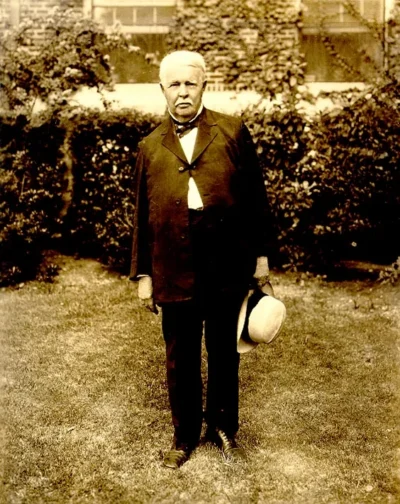
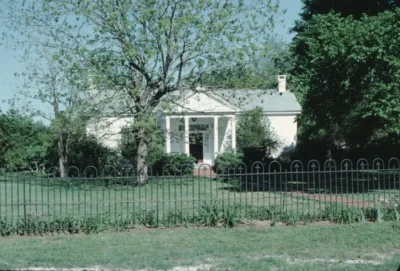
After leaving the governorship, Sayers practiced law in San Antonio before returning to Austin. He remained active in public life for decades: he served as chairman of the state Industrial Accident Board from 1913 to 1915, as a regent of the University of Texas in 1916 — where he supported the university in its fight against Governor James E. Ferguson’s interference — as a member of the board of legal examiners from 1922 to 1926, and on the board of pardon advisors from 1927 until his death.
In his second inaugural, Sayers had reflected on a career that stretched from the Civil War to the turn of the century: “The hairs of my head have grown gray in its service, as well on the field as in the council chamber, and when my public career shall have closed I desire, above all things else, to take with me into private life the consciousness of duty well performed.” That career would continue for another twenty-eight years.
He died in Austin on May 15, 1929, at the age of 87. A funeral procession brought his body to Fairview Cemetery in Bastrop, where Masonic lodges from Austin and Bastrop conducted the burial service.