The Texas Ranger Division, commonly called the Texas Rangers, is a statewide law enforcement organization consisting of veteran commissioned officers. Formerly independent, the Rangers became a founding component of the Texas Department of Public Safety (DPS) in 1935. Today, the Texas Rangers serve as an investigative and enforcement arm of DPS, working alongside its Criminal Investigations Division and other specialized units.
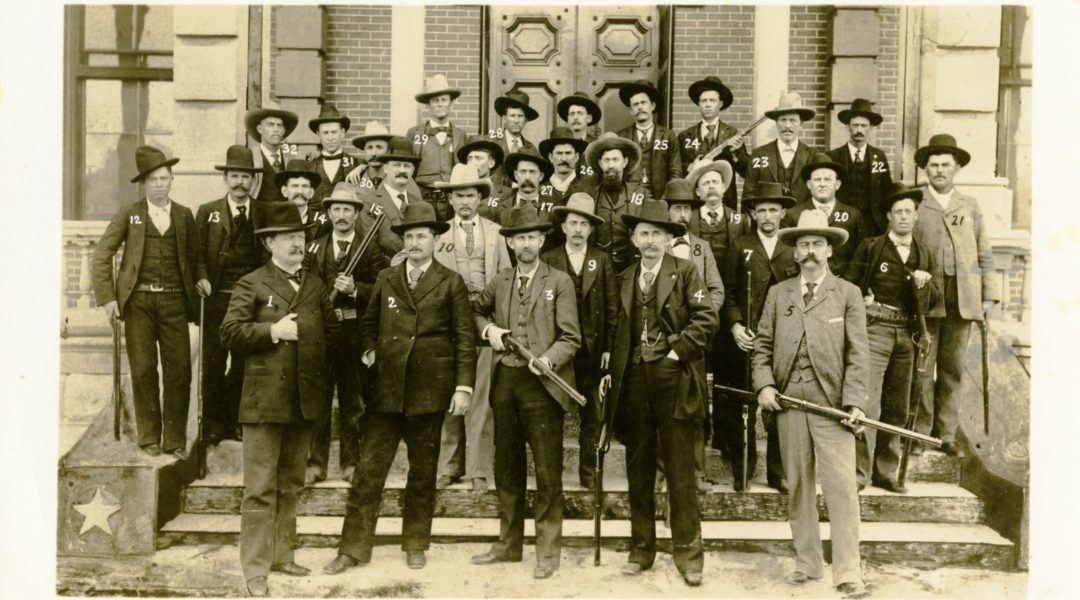
The Rangers are one of the oldest law enforcement units in the United States, with roots in a frontier defense force organized by Stephen F. Austin in 1823. They were at the center of many key events in early Texas history, including conflicts with Native American tribes, the Texas Revolution, the state’s territorial expansion, and famous manhunts and shootouts during the “Wild West” era.
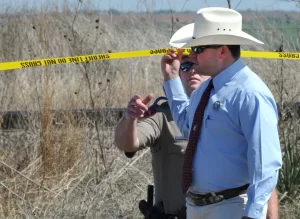
Over time, the Texas Rangers became closely associated with the myths and popular imagery of the American West, often portrayed in literature, film, and folklore as symbols of rugged frontier justice. Their historical legacy is complex, encompassing both celebrated investigations and participation in episodes of racial violence and political suppression during Texas’s frontier years, the Jim Crow era, and the period known in South Texas as “La Matanza” or “la hora de sangre”—the hour of blood.
As Texas transitioned from a frontier society to a modern state, the Rangers evolved into a professional investigative agency. In recent decades, the Rangers have focused on major crimes, public corruption, and police shootings, with an emphasis on professional standards.
At present, the Texas Rangers Division employs about 230 personnel, including commissioned Rangers, staff, and officers. Historically, the force was much larger, once numbering over 1,000. But a 1919 legislative inquiry into misconduct in the U.S.-Mexico border region, known as the Canales Investigation, led to deep cuts and long-term structural reform. Since then, state leaders have preferred to keep the force small—both to uphold professional standards and to protect the legacy of the Rangers as a selective unit that can be called on for difficult assignments.
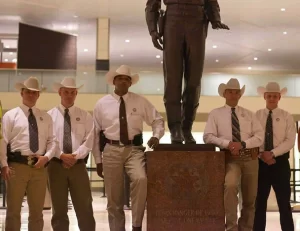
While this makes the Rangers a relatively small unit, their impact is amplified by their integration within the much larger Texas Department of Public Safety. DPS encompasses thousands of employees across multiple divisions, including the Highway Patrol, Criminal Investigations, Intelligence and Counterterrorism, and an extensive network of forensic scientists and crime lab specialists.
As a result, Rangers often operate in tandem with DPS’s broader resources—drawing on technical support, forensic analysis, and interagency coordination that greatly expand their investigative reach. This structure allows the Rangers to maintain a statewide presence while focusing on complex cases such as major violent crimes, public corruption, and officer-involved shootings.
Structure and Organization
The Rangers are organized into six companies, “A” through “F,” based in different parts of the state, plus a Special Operations Group and a Public Integrity Unit. The companies are headquartered in Houston, Garland, Lubbock, Weslaco, El Paso, and Waco, but Rangers belonging to these companies may also be stationed in other towns.
Each company is headed by a major and is subdivided into two or more units consisting of a lieutenant and 7 to 12 Rangers. For example, Company C consists of a major with two administrative staff in Lubbock, a unit of 12 in Lubbock, and a unit of nine in Amarillo.
The Texas Rangers Special Operations Group is headed by a major and consists of three regional response teams, designated Red, Black, and Green, each consisting of six to eight Rangers. Some Rangers also are assigned to other specialized DPS units, such as SWAT, Crisis Negotiations, and Border Security Operations.
At the headquarters, the Rangers are led by a chief and assistant chief, with officers also assigned to different roles including forensics, major crime scenes, public integrity, intelligence, administration, and a sexual assault kit initiative.
Role and Responsibilities
The Texas Rangers’ major duties include tasks not typically handled by local law enforcement, along with some duties shared with State Troopers and DPS’s Criminal Investigations Division. These duties include:
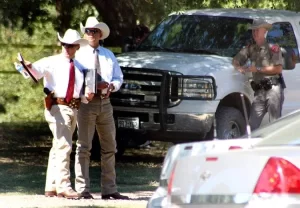
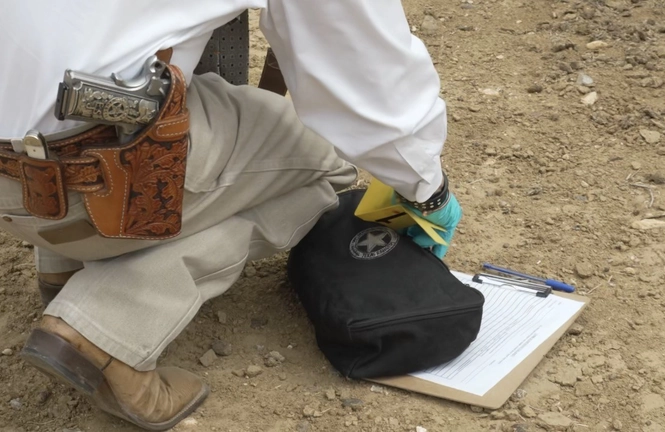
- Major Crime Investigations – Conducting investigations into serious crimes such as serial murders, cold case murders, mass shootings, major thefts or heists, etc.
- Officer-Involved Shooting Investigations – When a shooting involving a law enforcement officer occurs, the Rangers conduct an investigation to determine the circumstances and legality of the use of force. Their findings are then submitted to the appropriate district attorney or grand jury for review.
- Public Corruption Investigations – The Rangers’ Public Integrity Unit investigates state or local officials accused of corruption, bribery, or improper influence. This is a duty that they took over from the Travis County District Attorney’s Office (located in Austin) in 2015, following political controversy.
- Executive Protection – Just as the U.S. Secret Service investigates threats against the president, the Texas Rangers investigate threats against the governor and other officials.
- Special Operations – Engaging in tactical operations, including SWAT and crisis response, fugitive apprehensions, etc.
- Border Security – Assisting state, federal, and local law enforcement in securing the Mexico border and combating human and drug trafficking.
Cold Case and Unsolved Crimes Investigations
The Texas Rangers operate a dedicated Unsolved Crimes Investigation Program to help Texas law enforcement agencies pursue unsolved murders and suspected serial or linked crimes. Because Texas has no statute of limitations on murder, the state treats these cases as open indefinitely rather than closing them after a fixed period. Each of the Rangers’ six companies has Rangers assigned specifically to cold case work, supervised by staff lieutenants at division headquarters.
A related but separate function is the Sexual Assault Kit Initiative (SAKI), a federally funded partnership with the U.S. Department of Justice’s Bureau of Justice Assistance. Rangers assigned to SAKI assist local agencies with advanced DNA testing of previously untested sexual assault evidence, supporting both sexual assault investigations and related homicide cases.
The Rangers maintain a public cold case website listing unsolved cases from across the state, distinct from missing- and unidentified-persons cases. Selected cases are periodically featured to generate new investigative leads, with an increased Texas Crime Stoppers reward offered for tips submitted during the feature period.
Public Integrity Unit
The Texas Rangers’ Public Integrity Unit investigates alleged “offenses against public administration” — a category defined in the Penal Code to include bribery and corrupt influence, perjury and falsification, obstruction of governmental operations, and abuse of office offenses such as official oppression and misuse of official information.
Most prosecutions involve local rather than state officials. For example, a Bastrop County commissioner was indicted for using county crews to resurface two private roads without approval. A former Central Texas police chief was convicted of “abuse of official capacity” after threatening to tow a resident’s truck and revoke another’s driver’s license unless they gave hay bales to his ex-girlfriend.
The unit’s role has drawn criticism on both aggressiveness and independence grounds. From 2015 to 2020, it completed more than 560 public corruption investigations, but only 67 led to prosecution, and cases against state-level officeholders rarely advanced at all. According to a former Texas Ranger who investigated public integrity cases, opening an investigation into an elected official generally requires approval through the chain of command and often a supporting letter from a district attorney committing to prosecute if the investigation produces sufficient evidence.
Ranks of the Texas Rangers
The Texas Rangers use a six-tiered rank structure: Ranger, Lieutenant, Captain, Major, Assistant Chief, and Chief. While Ranger is the division’s entry-level rank, it is a highly selective position within DPS. Comparable to a sergeant in other agencies, a Ranger operates with broad investigative authority and is trusted with major cases across Texas.
Lieutenants supervise small teams and handle daily coordination. Captains lead one of the division’s six geographic companies, overseeing operations, personnel, and interagency cooperation.
Majors provide senior leadership on complex or cross-company investigations. Rather than serving a fixed region, they focus on major cases, training, and policy support, similar to bureau chiefs elsewhere. The Assistant Chief helps direct division-wide strategy and internal operations, much like a deputy commissioner.
At the top is the Chief of the Texas Rangers, who sets the division’s priorities, manages overall operations, and represents the Rangers within DPS and to the public.
Uniforms of the Texas Rangers
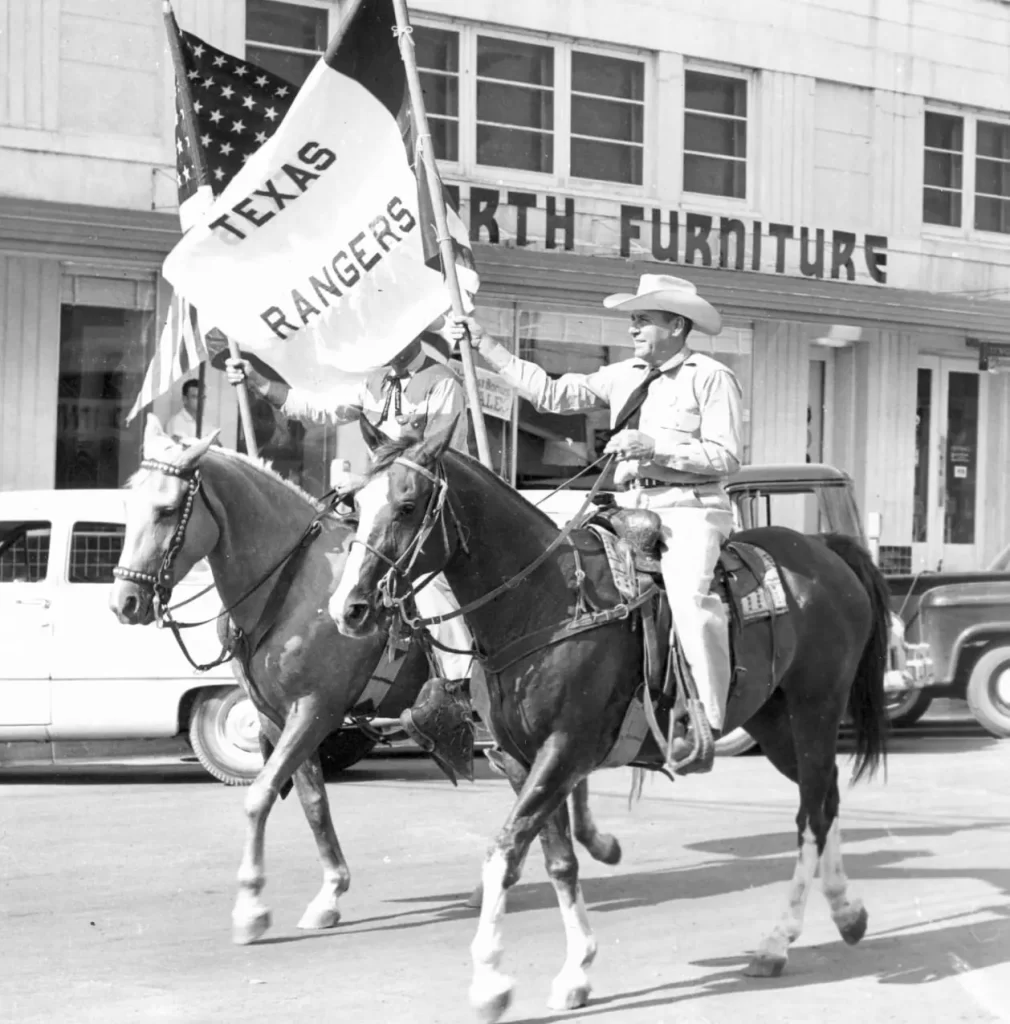
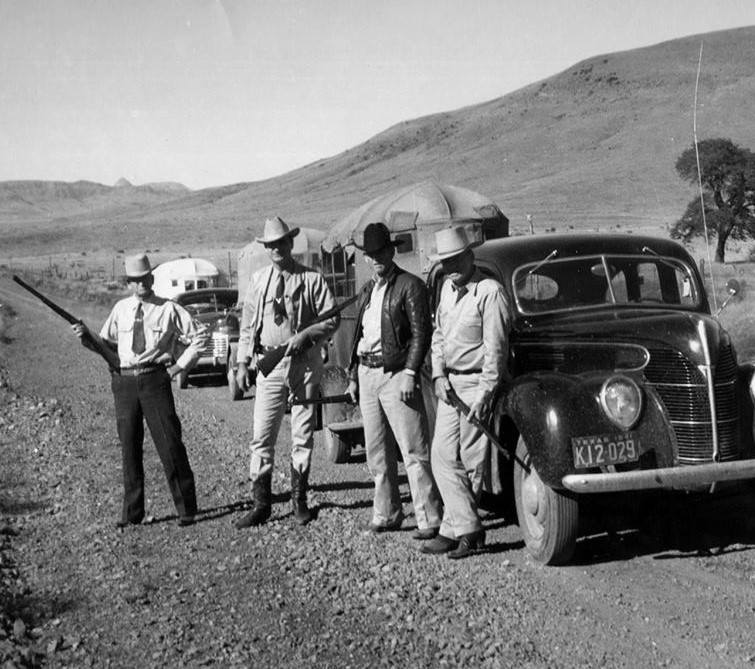
Texas Rangers are expected to wear conservative Western attire, which includes a Western hat (typically a white or light-colored Stetson), a dress shirt, a tie, appropriate pants, and boots.

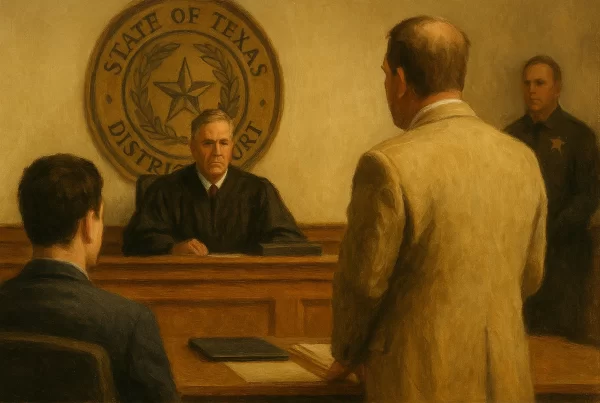
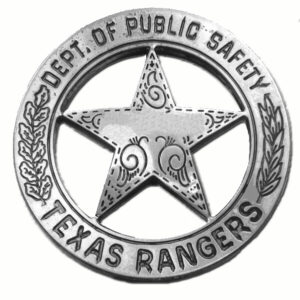
In formal settings, such as court appearances or high-profile public events, Rangers may wear business suits. The Texas Rangers’ historical uniform has evolved over time, but one constant is their iconic silver badge, which was historically crafted from Mexican five peso coins.
Powers and Limitations
The legal powers of the Texas Rangers are defined primarily by the Texas Government Code and other state statutes. These powers grant the Rangers a unique set of authorities while also imposing certain limitations.
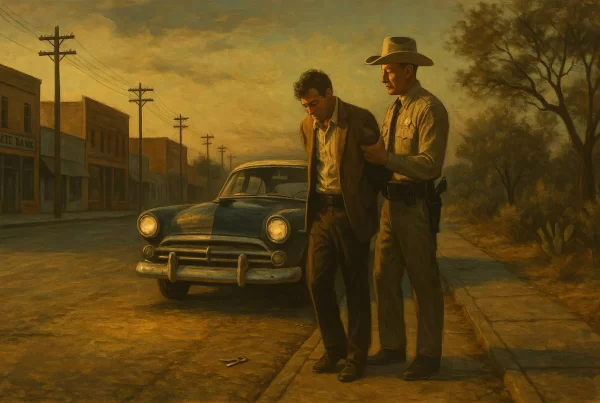
The most significant aspect of the Rangers’ legal authority is their statewide jurisdiction. According to Government Code Section 411.022, the Texas Rangers possess the same powers as sheriffs when it comes to making arrests and carrying out law enforcement duties. However, unlike sheriffs, who are confined to their own counties, the Texas Rangers can perform their duties anywhere in the state of Texas. This statewide jurisdiction allows the Rangers to respond to incidents and criminal activity in any of Texas’ 254 counties, giving them a level of flexibility and reach that local law enforcement agencies do not have.
When a Ranger makes an arrest, state law requires that the individual be promptly handed over to the appropriate officer in the county where the offense occurred, so that local law enforcement can oversee detention and prosecution. This prevents Rangers from holding a person in custody longer than necessary or bypassing local legal procedure.
The law mandates that the Ranger does not retain custody of the person for longer than necessary and that local law enforcement agencies are responsible for overseeing the detention and eventual prosecution of the accused. This restriction ensures that the Rangers cannot bypass local legal procedures or detain individuals for long periods without proper authority.
While the Rangers have the power to make arrests and conduct investigations, they are not granted carte blanche authority to act independently in every situation. They operate under the same legal framework that governs all law enforcement officers in Texas, including rules of evidence, due process, and the protection of individuals’ rights — and their power to arrest is subject to the same constitutional requirements as any other agency, including probable cause. When making arrests or conducting investigations, Rangers are also required to follow proper legal procedure, including obtaining warrants where necessary.
Qualifications to Become a Ranger
Applicants to become Texas Rangers must meet the following requirements:
- At least eight years experience with a law enforcement agency, engaged principally in the investigation of major crimes.
- Currently employed as a commissioned officer in the Texas Department of Public Safety, with a rank of at least Trooper II.
- U.S. citizen.
- Possess a valid Texas driver’s license.
- Excellent physical condition.
- Good moral character and habits.
Applicants to the position take an entrance examination and those who score highest are invited to an oral interview before final selection.
Famous Cases and Operations
The Texas Rangers have been involved in numerous significant investigations throughout their history, cementing their reputation as one of the most renowned law enforcement agencies in the United States. Below are some of the most notable cases and operations:

- Bonnie and Clyde (1934): Rangers, led by Frank Hamer, tracked the outlaw couple across Texas and neighboring states. Their ambush in Louisiana ended one of America’s most infamous crime sprees.
- Brownsville Raid Inquiry (1906): Rangers investigated a deadly incident involving U.S. Army soldiers in Brownsville. Their work contributed to a national scandal over the wrongful discharge of Black troops.
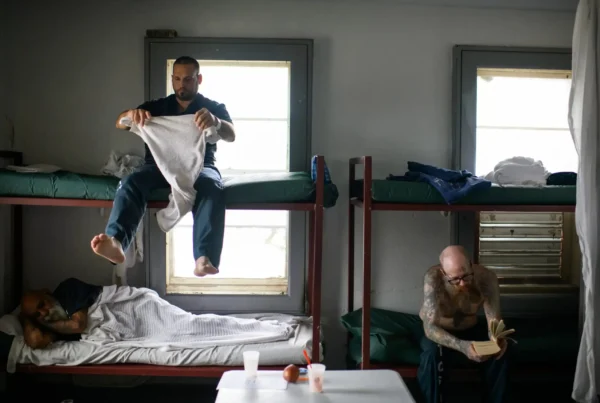
- Texas Prison Hostage Crisis (1974): Rangers responded when inmates seized guards and hostages at the Huntsville Prison. They coordinated with other DPS units to resolve the standoff.
- Henry Lee Lucas Serial Murder Confessions (1980s): Rangers interrogated the drifter who confessed to hundreds of killings. Their involvement eventually exposed widespread false confessions and investigative flaws.
- Drug Cartel Investigations (1990s): Rangers worked with federal agencies on cross-border drug trafficking. Their presence was critical in several major busts in South Texas.
- Public Integrity Investigations (2015–present): Rangers took over state-level corruption cases after the Travis County unit was dissolved. They have since handled hundreds of investigations into local and state officials.
- Cortina Troubles (1859–1860): Rangers clashed with Juan Cortina’s forces in the Rio Grande Valley, driving the local strongman out of Brownsville.
- Sam Bass Manhunt (1878): Rangers tracked down the outlaw gang responsible for train robberies across Texas, killing gang leader Sam Bass in a shootout in Round Rock.
- Fence-Cutting Wars (1880s): Rangers were deployed to stop widespread destruction of barbed-wire fences in West and Central Texas. Their patrols helped suppress escalating violence between ranchers.
- Plan of San Diego Raids (1915–1916): Rangers fought against cross-border raiders aligned with a revolutionary manifesto. The violence left hundreds dead and sparked controversy over Ranger conduct.
- “Santa Claus Bank Robbery” (Cisco, 1927): Rangers helped pursue Marshall Ratliff’s gang after their infamous Christmas Eve robbery.
- Texas Seven Prison Escape (2000): Rangers led the statewide manhunt for seven escaped convicts from the Connally Unit. All were eventually captured, with one dying by suicide during arrest.
- Kari Baker Murder Case (2006): A Texas Ranger helped reopen the case of a Hewitt schoolteacher’s death after local police ruled it a suicide without autopsy. The reinvestigation, driven largely by the victim’s family, led to the 2010 murder conviction of her husband, a Baptist minister.
On the other hand, the Rangers themselves were also accused of crimes and abuses at times, particularly early in their history. The Canales Investigation of 1919 was a significant moment in the history of the Texas Rangers. It was a legislative hearing convened by Representative José T. Canales, who led the investigation into alleged criminal conduct by the Texas Rangers.
Canales, a member of the Texas House of Representatives, sought to address accusations of misconduct and abuse of power by the Rangers, particularly regarding their violent actions during the Mexican-American conflicts and their role in the suppression of minority communities. The investigation, which involved testimonies from witnesses and the review of various incidents, revealed a troubling pattern of excessive force and lawlessness.
As a result, the investigation led to a reduction in the Rangers’ powers and greater scrutiny over their conduct, marking a pivotal turning point in their history. The Canales Investigation is often regarded as an essential event that contributed to reform within the Texas Rangers and brought attention to the need for accountability in law enforcement.