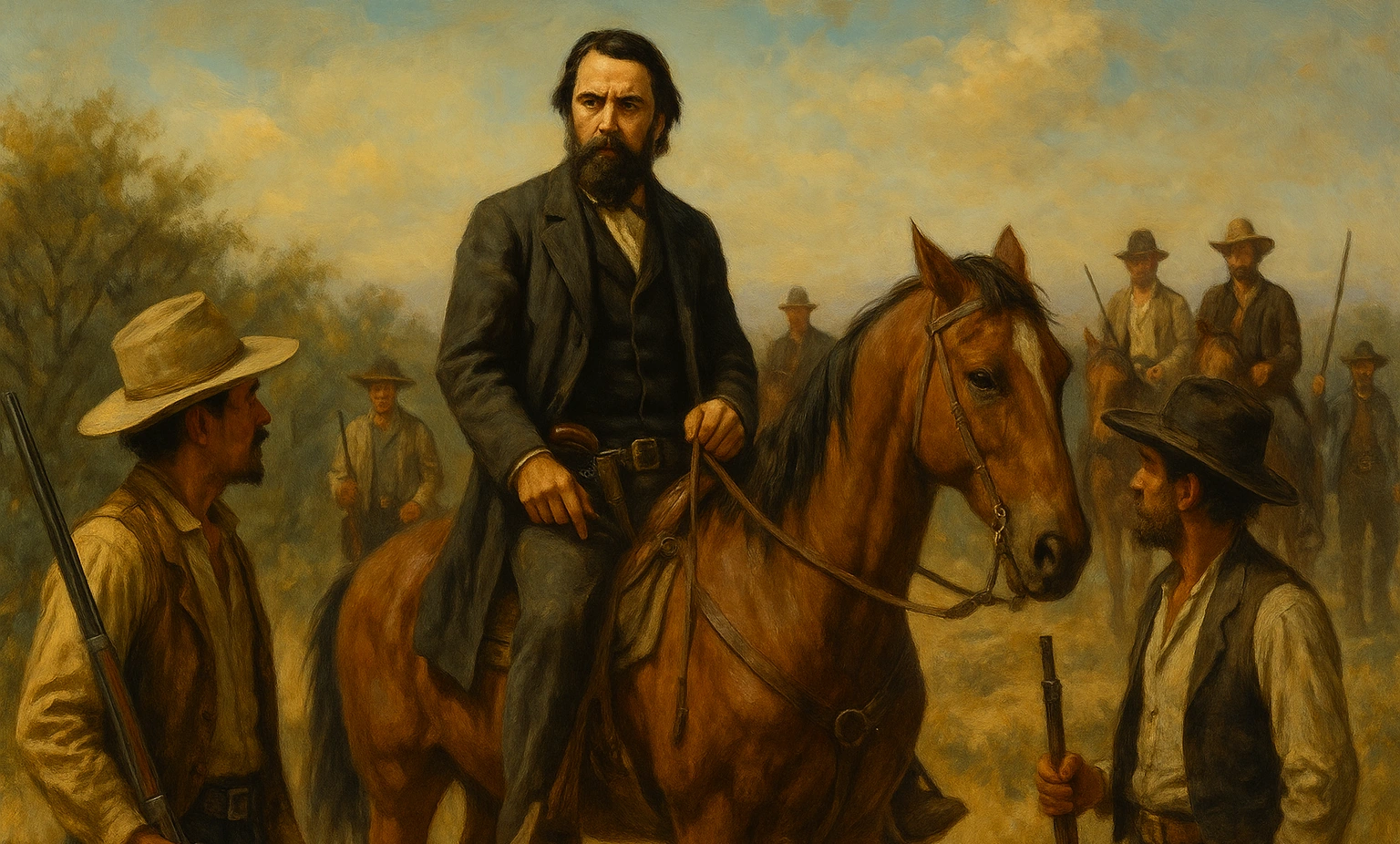
Juan Nepomuceno Cortina (1824–1894), better known by his nickname “Cheno,” was a wealthy rancher and militia leader, who resisted Anglo settlement in the Rio Grande Valley and retaliated against evictions and abuses of Tejano residents in the area around Brownsville in the 1850s-1860s.
He belonged to a class of regional strongmen, called caudillos, who arose in the power vacuum that emerged in Mexico after the Mexican-American War. His partisans clashed with various American forces, including the Texas Rangers, the U.S. Army, the Confederate Army, and armed settlers and ranchers. History books refer to these clashes as the “Cortina Troubles” or “Cortina Wars.”
Remembered either as a villain or a Robin Hood-like folk hero, Cortina eventually declared himself governor of Tamaulipas before being arrested and exiled to Mexico City as a result of U.S. diplomatic pressure.
Cortina descended from a wealthy ranching family that held the largest Spanish land grant in the Rio Grande Valley, including territory on both sides of the river around Brownsville and Matamoros. Although he was born in Camargo, Tamaulipas, which today is on the south side of the international border, his family moved to the northern side when he was young. Cortina identified as both a Mexican and a Tejano, identities that were overlapping.
Cortina’s teenage years and 20s coincided with the Texas Revolution, the rise and fall of the Republic of the Rio Grande in northern Tamaulipas, and the Mexican-American War. He enlisted in the Mexican Army at the age of 22, during the U.S. invasion led by General Zachary Taylor. His earliest armed followers likely served with him in an irregular cavalry unit that fought in that war. Additionally, he employed fighters who were originally ranch hands, as well as disaffected citizens, farmers, and ranchers from Brownsville and nearby towns.
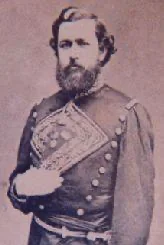
Cortina was charismatic, ambitious, and often positioned himself as a defender of the poor and dispossessed, especially Mexican-descended families caught in legal limbo over land claims after Texas became part of the United States. He first came to broader attention in July 1859, when he witnessed Brownsville town marshal Robert Shears brutally pistol-whipping Tomás Cabrera, a former ranch hand of the Cortina family. Cortina intervened, ordering Shears to stop. When the marshal refused, Cortina shot him in the shoulder and fled with Cabrera.
The event shocked Anglo residents, who saw it as an act of lawless defiance, but it elevated Cortina as a hero among many Tejanos who viewed the Brownsville police and courts as instruments of racial oppression. The incident set off a series of events that became known as the First Cortina War, which lasted through early 1860 and involved fighting at several places along the river.
In September 1859, Cortina returned to Brownsville with around seventy mounted men, most of them armed with pistols and old cavalry gear. In the early morning hours, his group entered Brownsville, seized the town without resistance, and paraded through the streets, shooting and shouting. They killed four men, let all prisoners out of the city jail, and hoisted a Mexican flag over Fort Brown, which the U.S. Army had recently abandoned on orders from Washington.
Cortina and his men evacuated the town when Mexican Army officers began crossing from the other side of the Rio Grande to assist the Brownsville residents. He returned to his mother’s ranch, located about nine miles northwest of Brownsville, and issued a proclamation in both Spanish and English condemning the abuses of Mexicans by the courts, the police, and White settlers.
The events sent Brownsville into panic. White citizens formed a militia unit called the Brownsville Tigers and launched an attack on Rancho del Carmen, Cortina’s mother’s estate. The raid ended in failure and disarray, with Cortina’s forces easily repelling the assault and capturing their attackers’ two small cannons. Cortina’s popularity among poorer Mexicans on both sides of the river grew, and his army expanded with new recruits.
During this period, the Brownsville Tigers re-arrested Tomás Cabrera, Cortina’s former employee. Cortina demanded his release and allegedly threatened to burn the town.
In November, a company of Texas Rangers under Captain William G. Tobin arrived, removed Cabrera from the Brownsville Jail, and hanged him. This Ranger company then joined the Brownsville Tigers in another failed attack on Cortina and his men. On November 23, Cortina issued a second proclamation from Rancho del Carmen, condemning the seizing of Tejano lands and declaring that White Texans were “criminals covered with frightful crimes… not fit to belong to the human species.”
“Many of you have been robbed of your property, jailed, chased, murdered, and hunted like wild beasts, because your labor was fruitful, and excited vile avarice… Mexicans! Is there no remedy? Mexicans! My stand is taken; the voice of Revelation tells me that to me is entrusted the breaking of the chains of your slavery.”
Proclamation of Juan N. Cortinas, Cameron County, Nov. 23, 1859
By early December, a more capable force of Texas Rangers arrived under the command of Captain John “Rip” Ford, and the U.S. Army dispatched Major Samuel P. Heintzelman with 165 regular troops. Heintzelman reoccupied Fort Brown, which had been abandoned several years earlier, and took overall command of combined operations against Cortina, coordinating with Ford and the local militia.
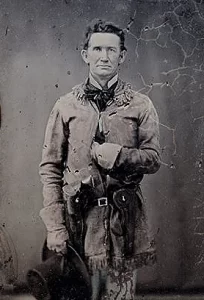
Meanwhile, Cortina, now reportedly commanding between 450 and 700 men, retreated upriver, burning ranches and settlements as he went. On December 27, 1859, Heintzelman and Ford engaged his forces at the Battle of Rio Grande City. Cortina suffered a devastating defeat—sixty of his men were killed, and his army lost all equipment and supplies. Ford pursued him into the new year, defeating Cortina again and forcing him to flee into the remote Burgos Mountains in Tamaulipas. The First Cortina War was effectively over, though minor raids and tensions continued into the spring of 1860.
Two final engagements followed. On February 4, 1860, Cortina attempted to seize the steamboat Ranchero, owned by his business rivals Richard King and Mifflin Kenedy, at a bend in the river called La Bolsa. Texas Rangers crossed into Mexican territory to defend the boat and successfully forced Cortina to retreat. On March 17, at the Battle of La Mesa in Tamaulipas, Ford’s Rangers again routed Cortina’s forces. With mounting pressure from both the U.S. and Mexican governments to cease hostilities, Cortina faded from the scene and remained in hiding for over a year.
After the outbreak of the U.S. Civil War, Cortina aligned with the Union and was appointed a general in the Mexican army under the government of Benito Juárez. Although he never crossed into Texas in force, his support for the Union and his hostility toward Confederate sympathizers made him a strategic concern for Confederate officials. Some accused him of harboring runaway slaves and permitting raids from Mexican soil into Texas. While his military actions during this period were limited, his continued presence complicated Confederate control of the region and allowed Unionists and exiled Texans to maintain communication with Mexico.
After the war, tensions reignited. In 1866, Cortina clashed again with Texas ranchers and lawmen, provoking what some historians refer to as the Second Cortina War. Skirmishes and retaliatory raids once again destabilized the border, drawing the attention of both U.S. and Mexican officials. Facing mounting pressure, the Mexican government attempted to rein in Cortina’s activities, but his political base in northern Tamaulipas remained strong. He served for a time as a regional military commander and continued to operate with significant autonomy.
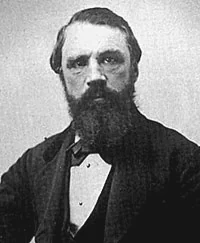
Cortina’s power peaked in the early 1870s, when he briefly assumed the title of governor of Tamaulipas, likely without formal recognition by the central government in Mexico City. His control over the region—built on ranching wealth, personal loyalty, armed supporters, and nationalist rhetoric—reflected the broader pattern of caudillo-style leadership that dominated much of northern Mexico in the turbulent decades following independence. But as President Porfirio Díaz sought to centralize power and modernize Mexico, the era of autonomous regional warlords began to close.
By 1876, U.S. and Mexican authorities had reached a tacit understanding to neutralize Cortina’s influence. Border violence had become an obstacle to cross-border commerce and foreign investment, and the Díaz regime was eager to prove its commitment to law and order. Under diplomatic pressure, Mexican officials arrested Cortina and transferred him to Mexico City, where he was placed under military surveillance.
Though still nominally a general, Cortina was removed from any real command and spent the remainder of his life under quiet house arrest. He died in relative obscurity in Mexico City in 1894, cut off from his native valley and the political power he once wielded.