The Battle of Galveston Bay on January 1, 1863, eliminated a Union foothold along the Texas coast, challenged Union naval dominance, and restored Confederate control over an important harbor and coastal blockade-running zone.
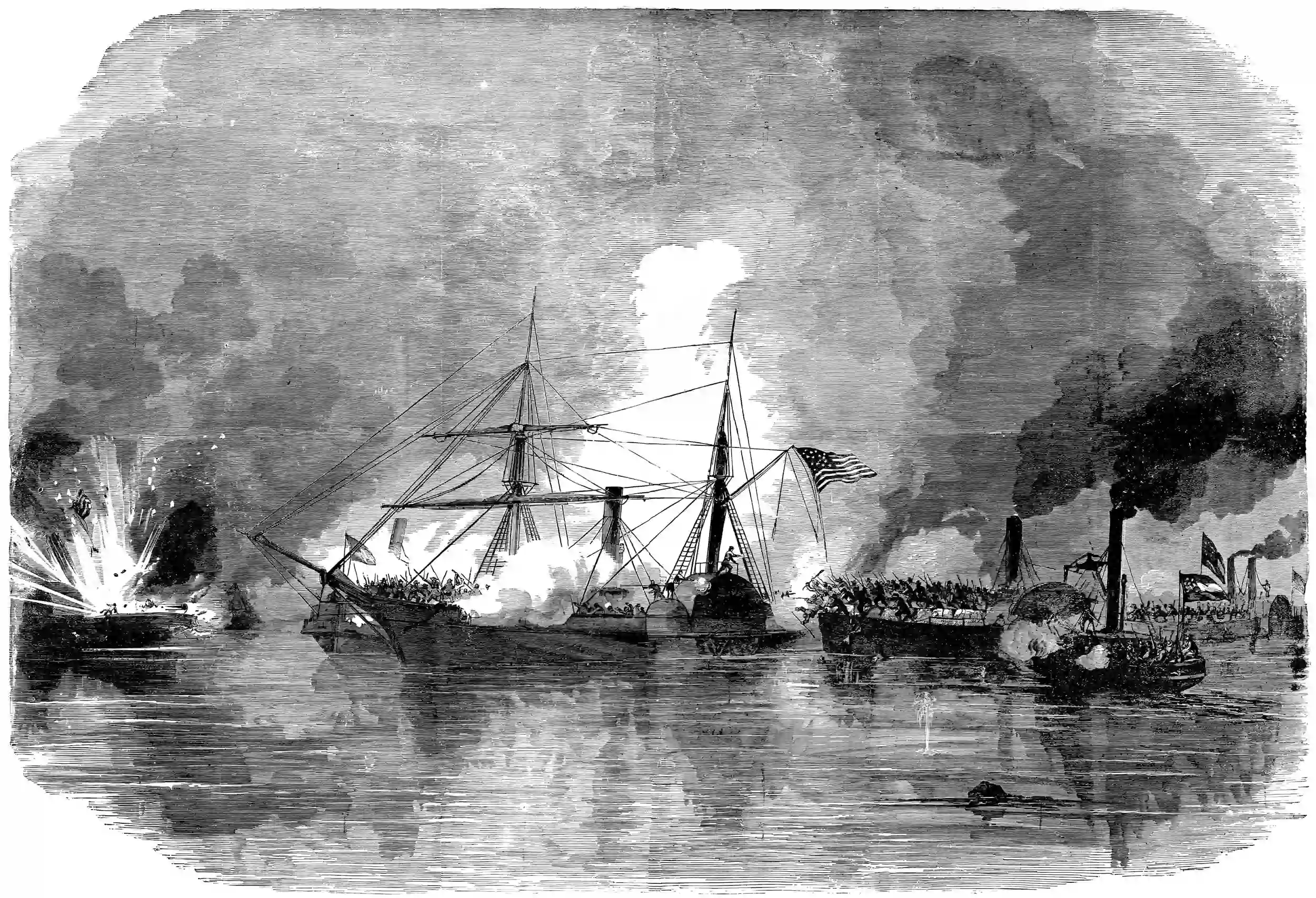
The battle ended in a Confederate victory following a combined naval-ground attack, forcing the surrender of the garrison and the partial loss of a U.S. gunboat squadron.
The U.S. Navy had occupied Galveston three months earlier as part of a wider coastal campaign to cut off Confederate shipping, seize or blockade Southern ports, and establish bases for inland raiding. Six powerful Union gunboats commanded the harbor and the approaches to the city, while a detachment of Massachusetts Infantry, 264 men, arrived a week before the battle to hold the city itself.
The dominance of the U.S. naval guns lulled the defenders into a false sense of security.
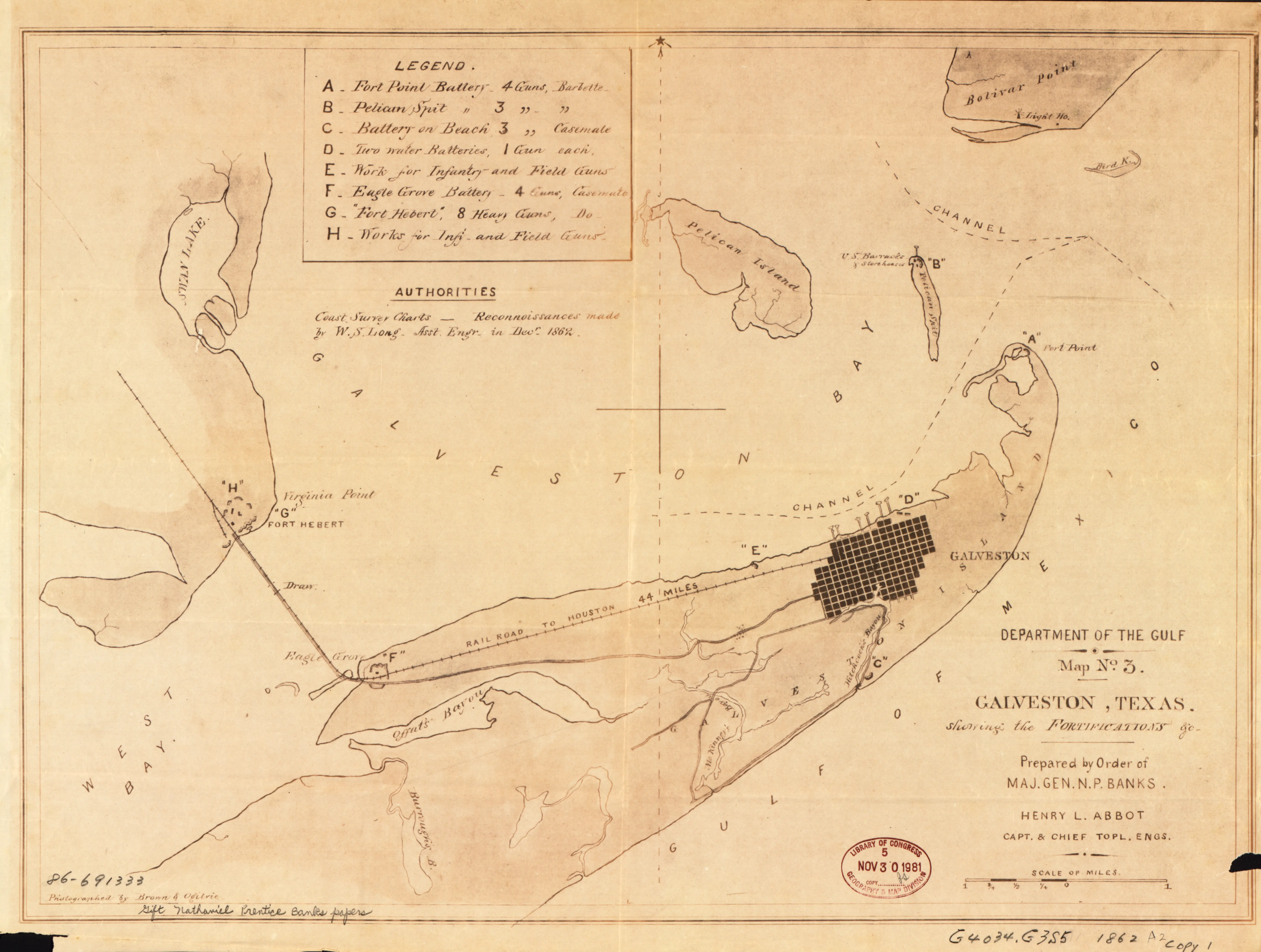
Before dawn on New Year’s Day, Confederate troops crossed the abandoned rail bridge from Fort Hebert (Virginia Point) and advanced along the rail track through the marshes west of the city, surprising the federals at the Galveston waterfront.
Fierce fighting ensued in Galveston’s wharves and streets. Initially, U.S. gunboats in the harbor assisted the land-based defenders with a barrage of fire, nearly forcing the Confederates to withdraw. But they were attacked from behind by two Confederate “cottonclads,” which rammed and boarded one federal ship, while running another aground on a sandbar.
The remaining Union ships fled the harbor, and the outnumbered defenders soon surrendered.
This map was produced by a U.S. military engineer shortly before battle. Fort Hebert, north of the rail bridge, was the main Confederate staging area for the assault, while Eagle Grove (Point F) was a battery position that was either unmanned or controlled by the Confederates prior to the battle.
Union positions were concentrated in the town itself, where the fighting took place. After this battle, the Confederate Army controlled Galveston until the end of the war, continuing to use the forts and batteries on this map to deter Union attempts to retake the city.
Admiral David Farragut called the Battle of Galveston Bay the “most shameful” incident in the history of the U.S. Navy.