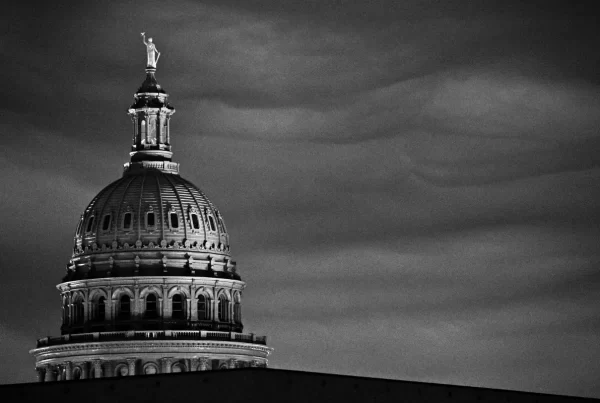
The Texas State Capitol is a building in Austin that serves as the seat of state government. It houses offices and meeting spaces for the Texas Legislature and the Governor of Texas.
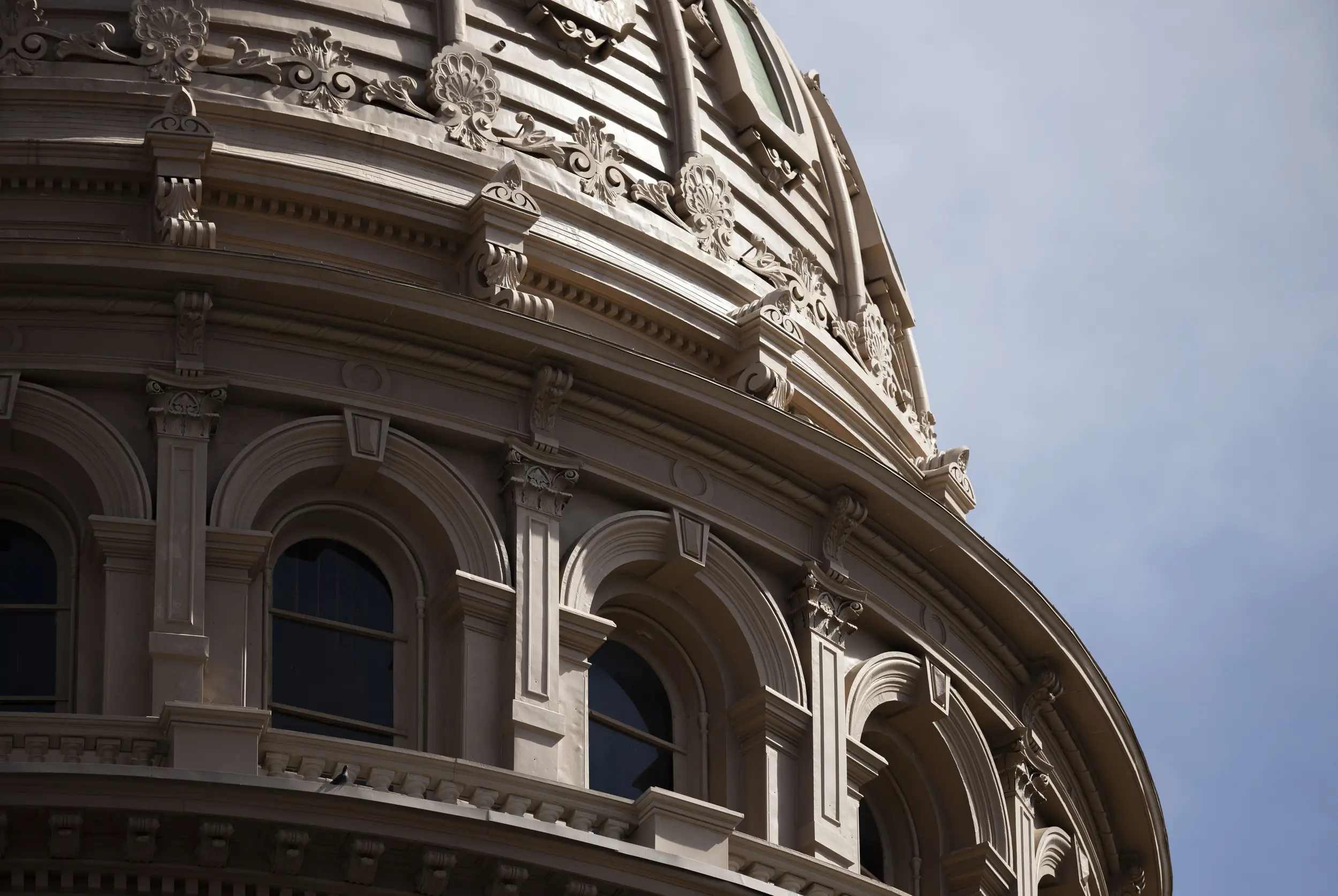
Built from 1882 to 1888, with an underground extension completed in 1993, the Capitol was designed by architect Elijah E. Myers in a Renaissance Revival style, blending classical and contemporary elements of the time. It features a distinctive dome, modeled after the U.S. Capitol building, and a rotunda adorned with murals depicting the history of Texas.

The Texas State Capitol stands 302.64 feet tall, making it not only taller than the U.S. Capitol but also the tallest state capitol building in the United States (in total size, however, the U.S. Capitol is larger). Its floor space, including the extension, is larger than any other state capitol.
The Capitol has a pinkish hue because of the red granite used in its construction, giving it a striking, unique appearance. Inside the Capitol, visitors will find lavish interiors, including ornate marble floors, a grand rotunda, and a series of murals that celebrate Texas’ history and its struggle for independence.
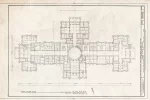
The House of Representatives uses the western wing of the building, while the Senate uses the eastern wing. Formerly, the Texas Supreme Court also met in the building, but now the court convenes in a separate, nearby structure.
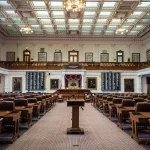
In addition to the legislative offices and hearing rooms, the Texas Capitol houses the Legislative Reference Library, which provides research and reference services to the state’s legislators and their staff.
The Capitol Extension, located under the northern Capitol grounds, houses lawmakers’ offices, a cafeteria, gift shop, auditorium with seating for 350 people, and 16 committee hearing rooms, each with a capacity of 75 to 100 people. Constructed as part of a comprehensive renovation and expansion project from 1989 to 1995, the Capitol Extension has 200,000 square feet of office space, plus parking for lawmakers and staff. Skylights provide natural lighting in the corridors of this underground complex, though the hearing rooms where much of the legislature’s business takes place are windowless.
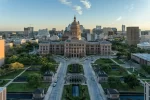
About 100 legislators have offices in the Capitol Extension, while House Speaker, Lieutenant Governor, and senior lawmakers have their offices in the Capitol itself.
Texans have long prided themselves on the architecture and ornamentation of the capitol, in a state that generally lacks other monumental architecture. At the May 1888 dedication ceremonies, State Senator Temple Houston, youngest son of Sam Houston, delivered these remarks:
“The architecture of a civilization is its most enduring feature, and by this structure Texas shall transmit herself to posterity, for here science has done her utmost… It would seem that here glitters a structure that shall serve as a sentinel of eternity, to gaze upon the passing ages, and, surviving, shall mourn as each separate star expires.”
“This noble edifice… and the features of our civilization are all that we can leave our posterity, and even should they prove unworthy of our bequest, we can at least pass from life’s stage with the proud reflection that we leave behind us a purer civilization and a nobler edifice than has been bequeathed to us by preceding ages.”
Temple Houston (1860-1905), politician and trial lawyer
These remarks were delivered to a crowd of thousands that gathered for a week-long state celebration for the Capitol’s grand dedication. Festivities involved a military parade, marching bands, grand ball in the legislative chambers, fireworks, cattle-roping, exhibitions, baseball games, German choral singing, and the debut of the “State Capitol Grand Waltz.” marking the moment as one of the most memorable days in Texas history.
Visiting the Capitol
Visitors to the Capitol can explore its expansive grounds, which are beautifully landscaped and home to more than 20 monuments and statues. The grounds surrounding the Capitol feature many statues and monuments. For example, there are monuments commemorating the defenders of the Alamo, Tejano culture, and African American history.
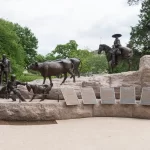
However, the Capitol also includes several statues of Confederate generals and soldiers—figures that have sparked considerable controversy in recent years. Ongoing debates over these statues focus on their symbolic significance and the role of such monuments in public spaces.
The Capitol also offers self-guided tours through the Capitol Visitor Center, where historical exhibits are on display, and free guided tours are available through the State Preservation Board.
The Capitol plays an important role not just in Texas history but in the present day, as it is the site of regular legislative sessions, special hearings, and press conferences. As a center of lawmaking and decision-making, it influences policy at both the state and national levels.
The Texas State Capitol has also made appearances in numerous films, TV shows, and documentaries, thanks to its iconic design and significance in Texas politics and history.
Timeline
| Year/Date | Event/Milestone |
|---|---|
| 1839 | Austin designated capital of Texas. First Capitol was a log structure surrounded by a stockade. |
| 1853 | Limestone Capitol building completed. |
| 1881 | Old Capitol destroyed by fire |
| 1882 | Construction of current Capitol begins |
| 1888 | New Texas State Capitol dedicated |
| 1891–1925 | Early monuments added: Alamo Heroes, Volunteer Firemen, Confederate Soldiers, Terry’s Texas Rangers, Hood’s Brigade, Texas Cowboy monuments. |
| 1951–1999 | Spanish–American War, WWI, WWII, Korea, Vietnam, and Peace Officers memorials added. |
| 1983 | Fire damages Capitol; State Preservation Board created. |
| 1989–1995 | Full restoration completed and underground Capitol Extension built. |
| 2012–2018 | Major new monuments added: Tejano Monument, Vietnam Veterans, African American History, and others. |