A City Born in the Wake of Revolution
In August 1836, shortly after Texas declared its independence from Mexico, Augustus and John Allen purchased over 6,600 acres along Buffalo Bayou with the intention of establishing a new town. The site offered navigable water access and proximity to Galveston Bay, making it attractive for commercial development.
Naming the town Houston in honor of General Sam Houston, the brothers began promoting the location as a potential seat of government and center of trade. Eventually, Houston grew into the largest city in Texas, with a population exceeding 2.3 million, and the center of a metropolitan region exceeding 7.4 million—making it the fourth-largest city in the United States and a major hub of commerce, transportation, and industry.
Houston’s founding was not the work of organic settlement or frontier necessity. It was an intentional act of speculation and civic promotion, meant to capitalize on the moment. It was a speculative investment, which succeeded due to a well-timed marketing campaign. Within a year, the fledgling town would serve as the capital of the Republic. And within a few decades, it would become one of the state’s most enduring urban centers.
The Allen Brothers: Merchants and Speculators
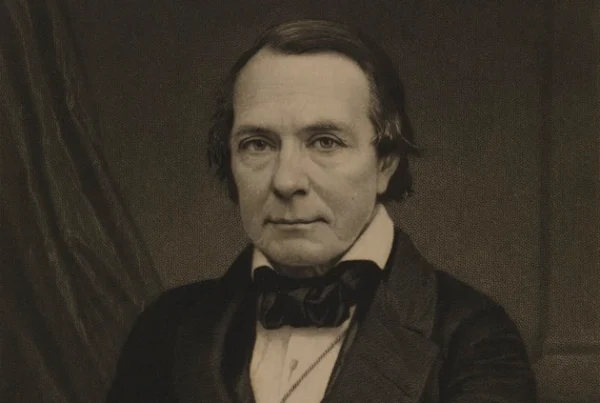
Augustus Chapman Allen and John Kirby Allen arrived in Texas in 1832, having migrated from New York through Nacogdoches and Galveston. Educated and entrepreneurial, they were deeply attuned to the economic promise of land speculation in a newly independent republic. Though neither had formal political power, both were well connected to Texas leaders—most notably Sam Houston, whose name they would ultimately borrow for their city.
Their plan was straightforward: purchase undeveloped land near navigable water, publicize it as the next great city, and drive up its value through sales and political influence. The land they secured in August 1836 totaled over 6,600 acres, obtained from T.F.L. Parrot, the executor of John Austin’s widow, for $5,000. From the start, they promoted Houston not merely as a settlement but as a contender for the capital of the Republic.
The Allen brothers were far from the only land speculators in early Texas. But they were among the boldest, and their campaign to establish Houston succeeded in part because they understood the political currents of the day. As the Republic of Texas searched for a capital location in late 1836, the Allens offered free office space, incentives, and persistent advocacy. Their vision was as political as it was economic.
Founding and Promoting the City of Houston
The Allen brothers wasted no time in publicizing their new venture. On August 30, 1836, just days after finalizing the land purchase, they placed advertisements in the Telegraph and Texas Register declaring that the town of Houston had been founded. Their promotional materials emphasized the bayou’s navigability, the proximity to Galveston Bay, and the suitability of the area for commerce and governance.
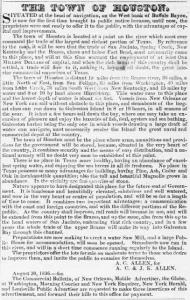
The initial advertisement in the Telegraph stated, “Nature appears to have designated this place for the future seat of Government. It is handsome and beautifully elevated, salubrious and well water, and now in the very heart or centre of population, and will be so for a length of time to come.”
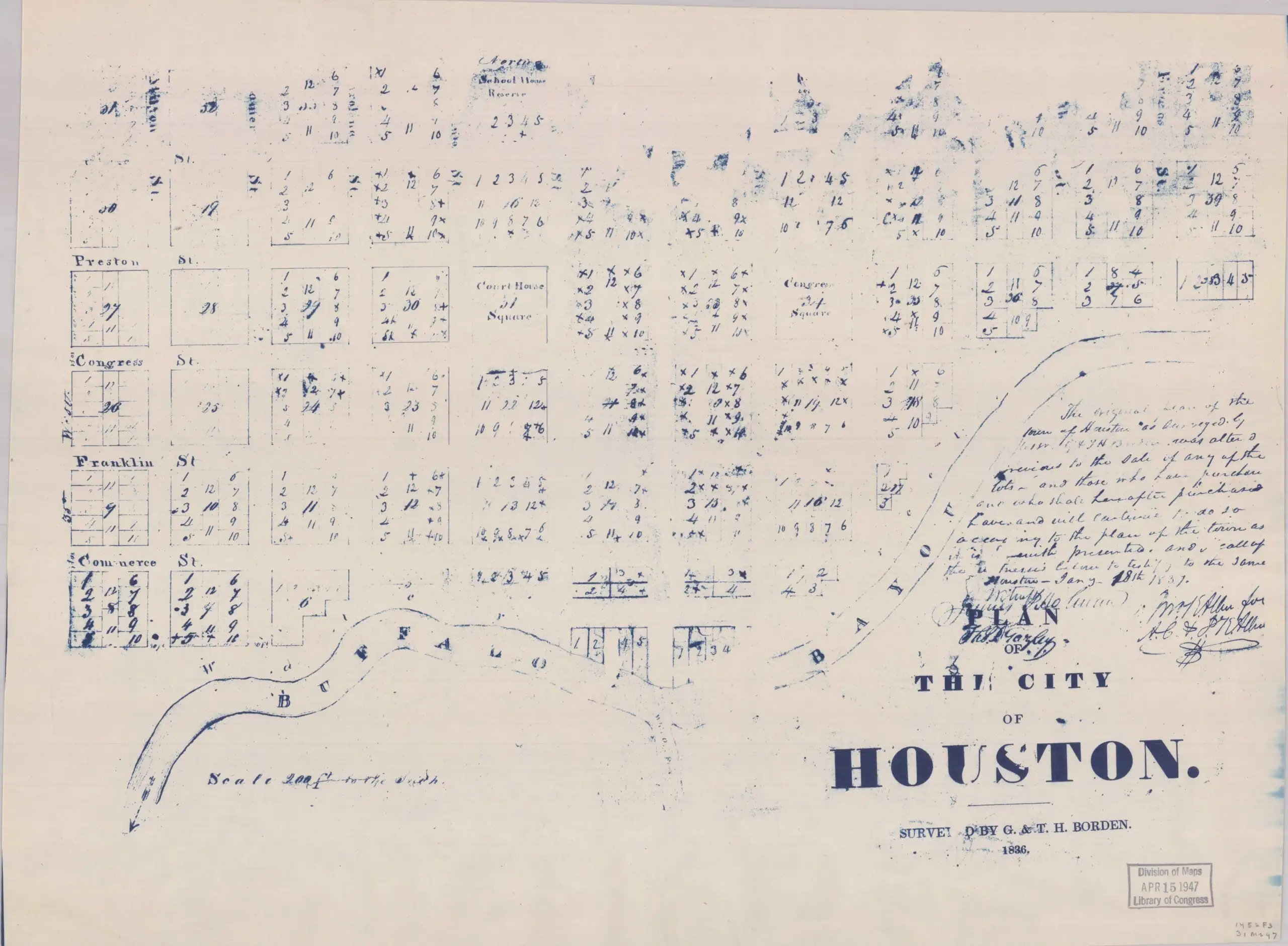
The city layout followed a grid plan, with wide streets named after heroes of the revolution—Travis, Fannin, Rusk—and with designated lots for public buildings. The Allens hired Gail Borden, future inventor and namesake of Borden milk, to serve as one of the early city surveyors. Lots were quickly offered for sale, and speculative activity intensified.
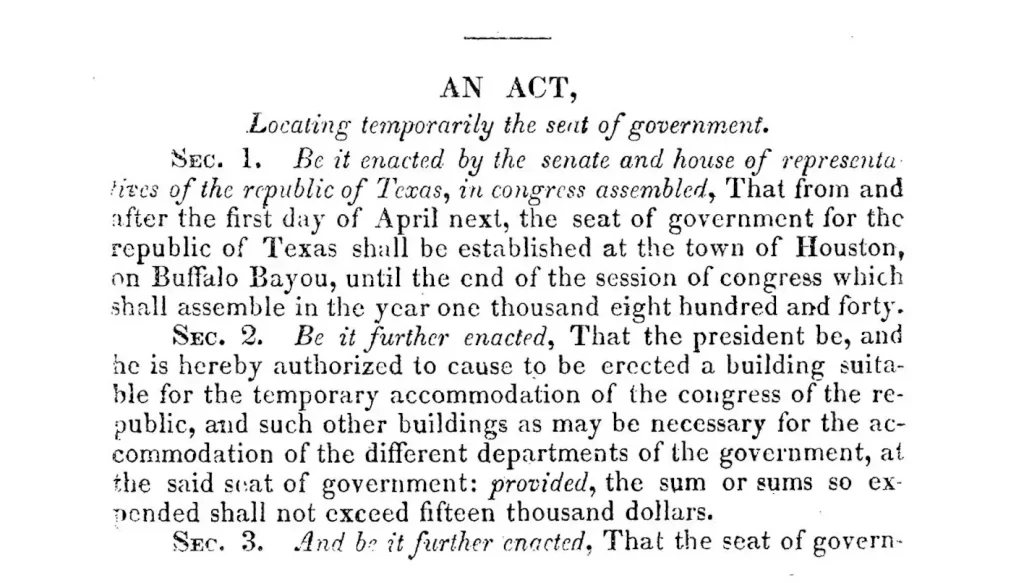
What set Houston apart from other speculative towns was its early political prominence. In December 1836, after heated debate, the Texas Congress agreed to move the capital from Columbia to Houston. The city officially served as the capital from 1837 to 1839, during which time it hosted sessions of Congress, the president’s residence, and early diplomatic missions. Though many contemporaries criticized the town’s muddy streets and makeshift buildings, its selection as capital gave it instant political legitimacy.
Capital of the Republic
Houston’s tenure as capital was brief but influential. The first Congress to meet in the city convened in May 1837, and President Sam Houston established his residence there. Foreign envoys—particularly from the United States and Great Britain—arrived to negotiate treaties and observe the new republic. Government buildings were hastily constructed, including a two-story wooden capitol and various boarding houses for legislators.
But the choice of Houston as capital faced criticism from the start. Its low, swampy terrain was prone to flooding and illness, and many members of Congress found the conditions difficult. Some suspected that the Allen brothers had used undue influence or offered personal inducements to secure the capital designation. After the election of Mirabeau B. Lamar as president, the political winds shifted.
In 1839, the capital was moved to a new planned site on the Colorado River—what would become the city of Austin. Houston lost its brief claim to central political authority, but it did not fade. By then, the city had established itself as a commercial hub, and the population continued to grow.
Commercial Growth and Civic Development
Even after losing the capital, Houston retained a central role in the Republic’s economy. The navigability of Buffalo Bayou allowed for the shipment of cotton, lumber, and hides, while steamboats ferried goods to and from Galveston. Warehouses, wharves, and counting houses lined the bayou. Merchants from the United States and Europe opened branches in Houston, drawn by the promise of a stable inland port.
The city also developed rapidly in civic terms. Churches, schools, newspapers, and courts took shape in the late 1830s and early 1840s. The Telegraph and Texas Register, one of the Republic’s most important newspapers, relocated to Houston during the capital years and remained a key outlet for political discourse. By 1840, the city had a population exceeding 2,000—an impressive figure for the time.
Houston’s charter government, granted in 1837 and modified in subsequent years, reflected the challenges of early urban administration. Issues like road maintenance, property disputes, public health, and taxation became matters of constant civic negotiation. These challenges mirrored those in other young Texas towns, but Houston’s size and visibility gave them broader resonance.
Role in the Republic and Early Statehood
Houston’s significance to Texas went well beyond its short-lived role as the capital. It served as a critical inland port, connecting the interior of Southeast Texas to the Gulf of Mexico and global trade routes. The success of Houston’s bayou commerce laid the groundwork for later port expansions and helped establish the city’s long-term economic base.
Politically, Houston was a magnet for leadership and debate. The city was home to multiple early congressmen, jurists, and legal theorists, and played host to the Republic’s early bureaucratic apparatus. Its courts heard important cases on property rights, debt, and mercantile law—issues at the heart of Texas governance during the Republic era. The city was also a site of ideological contest: as Lamar pushed for westward expansion and a new capital, many Houston residents remained loyal to Sam Houston’s more cautious vision for the Republic.
Culturally, Houston developed a civic infrastructure earlier than most towns in Texas. Its educational institutions, religious congregations, and print media shaped the broader intellectual climate of the Republic’s Southeast region. The city’s large immigrant population—including Germans, Anglo-Americans, and others—helped foster a diverse commercial class that contributed to Houston’s resilience.
After Texas joined the United States in 1845, Houston remained one of the state’s most important cities. While it did not become the permanent capital, it maintained legal and economic prominence, especially as the railroad era approached. By the late 1840s, the city had become a key node in state politics, finance, and trade.
The Allen brothers themselves saw limited long-term reward. John Kirby Allen died of yellow fever in 1838, and Augustus eventually moved away from Houston after disputes with the city government. Yet their role in shaping the geography and early political trajectory of Texas was lasting. Houston’s survival and eventual dominance were not inevitable, but they were made possible by the speculative vision of its founders and by the city’s fortunate confluence of geography, timing, and ambition.
Related Books
Dive deeper into this topic by purchasing any of these recommended books. As an Amazon Associate, Texapedia earns a commission from qualifying purchases. Earnings are used to support the ongoing work of maintaining and growing this encyclopedia.