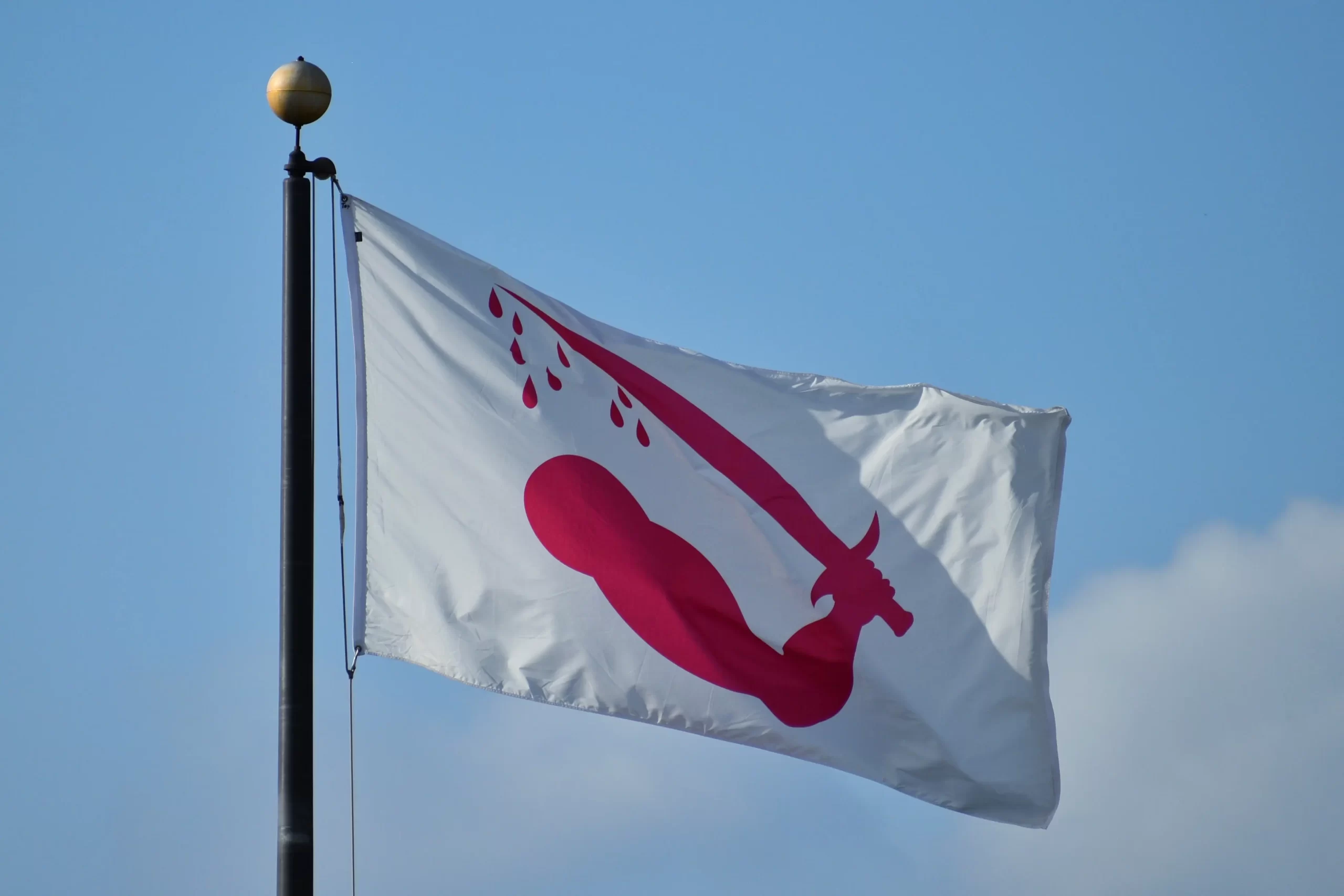
The Goliad Declaration of Independence was a handwritten document signed on December 20, 1835, by 89 American-born settlers and two Tejano federalists, declaring Texas to be a “free, sovereign, and independent State.”
The Goliad Declaration was a precursor to the more widely recognized Declaration of Independence made at Washington-on-the-Brazos two and half months later. However, Texas’s revolutionary leaders, meeting at that time at San Felipe de Austin, deemed it premature and feared it would alienate Mexican federalists with whom they wanted to make common cause.
The document reflected the aspirations of the Texans for self-government, as well as concerns over the recent actions of General Antonio Lopez de Santa Anna, who had dissolved the Mexican Congress and state legislatures, centralizing power and abolishing the Constitution of 1824.
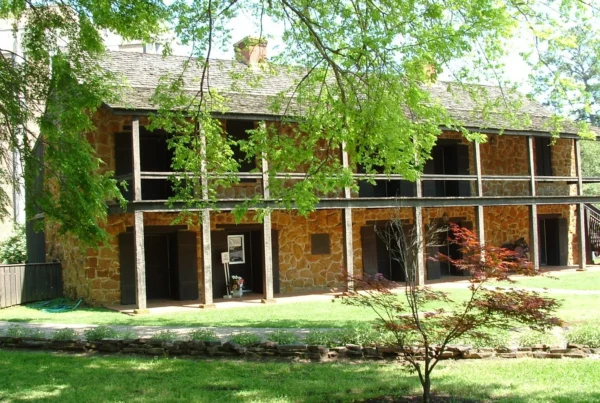
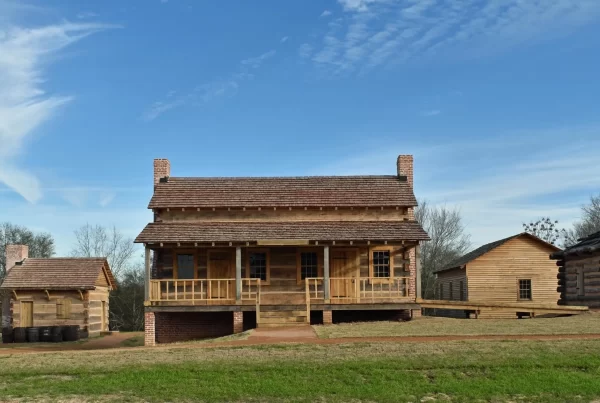
The Goliad Declaration denounced Santa Anna as a scheming “President Dictator” and warned that he would confiscate the lands of the American settlers in Texas. It was written during the early phase of military resistance to centralist Mexican rule, while Anglo-Texians under Philip Dimitt occupied the fort of Goliad, and shortly after General Martín Perfecto de Cos had surrendered the garrison at San Antonio de Béxar.
Goliad’s signers sent handwritten copies of their declaration to various parts of Texas, including a copy carried by a delegation to the revolutionary General Council that was meeting at San Felipe at the time. The copy that reached Brazoria, which had a print press, was printed and widely distributed.
On December 30, 1835, the General Council reviewed the declaration and referred it to the Committee on State and Judiciary. At that time, negotiations were underway in San Felipe with prominent Mexican federalists, such as General José Antonio Mexía, to determine whether Texas sought full independence or merely federalist reforms under the 1824 Mexican Constitution. The arrival of the Goliad declaration caused political discomfort, as Anglo leaders feared it might jeopardize the talks and alienate the Mexican federalists.
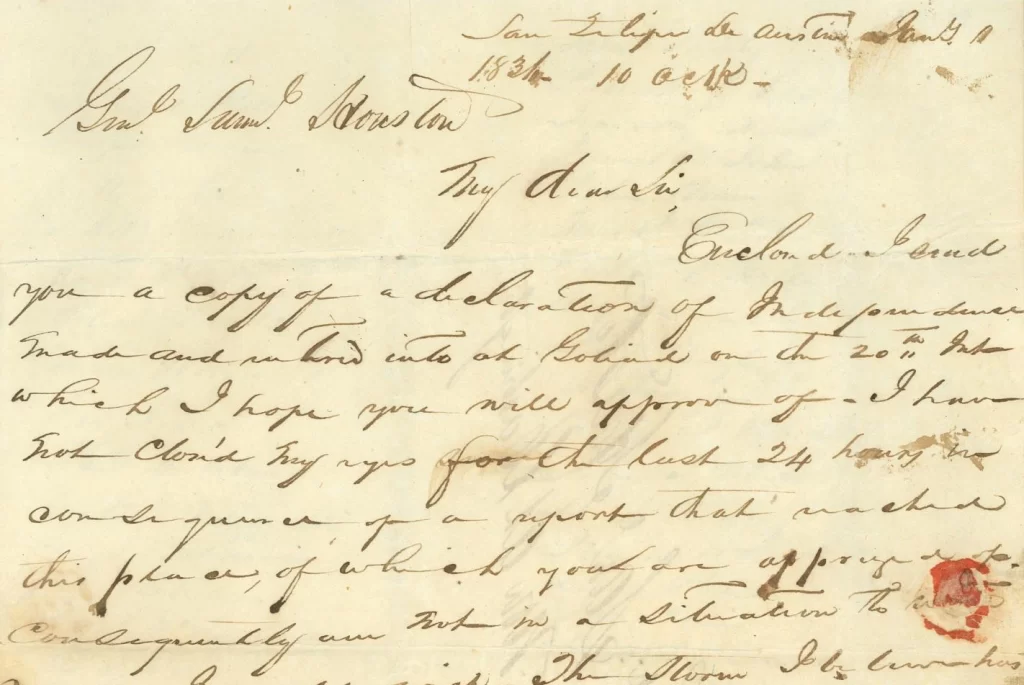
Additionally, the Texian leaders at San Felipe may have seen the Goliad Declaration as unnecessarily tactless toward the native Hispanic population of Texas. It used divisive language and faulted Tejanos at Goliad for failing to support the Anglo-Texan rebellion against the Mexican central government, even after an Anglo force had occupied the Presidio La Bahía at Goliad and driven out the Mexican Army garrison. The declaration even claimed that the Tejano population of San Antonio had fought alongside the Mexican Army against the revolutionary forces sieging the garrison there.
The Goliad Declaration asserted that the “Creole population” of Texas (Tejanos) had an “attachment to the institutions of their ancient tyrants,” and that they were “intellectually enthralled, and strangers to the blessings of regulated liberty.” Prematurely, the Goliad Declaration concluded “we need not expect or even hope for their co-operation,” adding, “the North and East of Mexico will now become the stronghold of centralism… the counter-revolution in the interior once smothered, the whole fury of the contest will be poured on Texas.”
This was wrong on both counts, since a number of Tejanos eventually did support the Texas Revolution—including at the Battle of the Alamo—and Mexicans in the North and East likewise rose up against the centralist government, declaring an independent republic in Coahuila, Nuevo León, and Tamaulipas, and rebelling in New Mexico, Sonora, and California.
Consequently, the provisional council at San Felipe de Austin cautioned the messengers from Goliad not to circulate their declaration further, and the Committee on State and Judiciary described it as “inconsiderately adopted.”
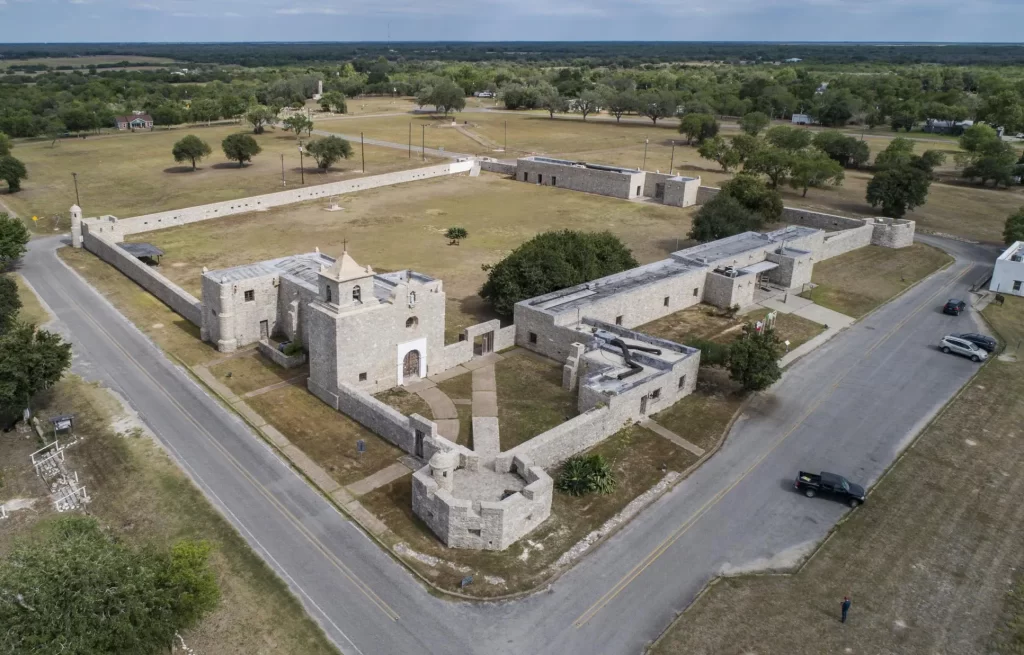
Despite the apparent flaws of the Goliad Declaration—its premature timing, its inflammatory language toward Tejanos, and its political awkwardness—the document carried weight in light of ongoing military events at Goliad. The town’s strategic position along the corridor between the Gulf Coast and San Antonio made it a key stronghold, and its occupation by Texian forces under Philip Dimitt lent practical force to the declaration’s bold claims.
Though the provisional government ultimately sidelined the document, its significance would grow in retrospect. The formal Texas Declaration of Independence was adopted on March 2, 1836—just weeks before Goliad became the site of one of the revolution’s darkest moments. On March 27, more than 300 Texian prisoners were executed at Goliad under Santa Anna’s orders. In that context, the Goliad Declaration’s early call for separation from Mexico took on a tragic clarity, marking the town as a symbol of revolutionary resolve in the face of tyranny.
DECLARATION OF INDEPENDENCE
Made at Goliad, December 20, 1835
Solemnly impressed with a sense of the danger of the crisis to which recent and remote events have conducted the public affairs of their country, the undersigned prefer this method of laying before their fellow-citizens, a brief retrospect of the light in which they regard both the present and the past, and of frankly declaring for themselves, the policy and the uncompromising course which they have resolved to pursue for the future.
They have seen the enthusiasm and the heroic toils of an army bartered for a capitulation, humiliating in itself, and repugnant in the extreme to the pride and honor of the most lenient, and no sooner framed than evaded or insultingly violated.
They have seen their camp thronged, but too frequently, with those who were more anxious to be served by, than to serve their country—with men more desirous of being honored with command than capable of commanding.
They have seen the energies, the prowess, and the achievements of a band worthy to have stood by Washington and receive command, and worthy to participate of the inheritance of the sons of such a Father, frittered, dissipated, and evaporated away for the want of that energy, union, and decision in council, which, though it must emanate from the many, can only be exercised efficiently when concentrated in a single arm.
They have seen the busy aspirants for office running from the field to the council hall, and from this back to the camp, seeking emolument and not service, and swarming like hungry flies around the body politic.
They have seen the deliberations of the council and the volition of the camp distracted and paralyzed, by the interference of an influence anti-patriotic in itself, and too intimately interwoven with the paralyzing policy of the past, to admit the hope of relief from its incorporation with that which can alone avert the evils of the present crisis, and place the affairs of the country beyond the reach of an immediate reaction.
They have witnessed these evils with bitter regrets, with swollen hearts, and indignant bosoms.
A revulsion is at hand. An army, recently powerless and literally imprisoned, is now emancipated. From a comparatively harmless, passive, and inactive attitude, they have been transferred to one pre-eminently commanding, active, and imposing. The North and East of Mexico will now become the stronghold of centralism. Thence it can sally in whatever direction its arch adviser may prefer to employ its weapons. The counter-revolution in the interior once smothered, the whole fury of the contest will be poured on Texas.
She [Texas] is principally populated with North-Americans. To expel these from its territory, and parcel it out among the instruments of its wrath, will combine the motive and the means for consummating the schemes of the President Dictator. Already, we are denounced, proscribed, outlawed, and exiled from the country. Our lands, peaceably and lawfully acquired, are solemnly pronounced the proper subject of indiscriminate forfeiture, and our estates of confiscation.
The laws and guarantees under which we entered the country as colonists, tempted the unbroken silence, sought the dangers of the wilderness, braved the prowling Indian, erected our numerous improvements, and opened and subdued the earth to cultivation, are either abrogated or repealed, and now trampled under the hoofs of the usurper’s cavalry.
Why, then, should we longer contend for charters, which, we are again and again told in the annals of the past, were never intended for our benefit? Even a willingness on our part to defend therm has provoked the calamities of exterminating warfare. Why contend for the shadow, when the substance courts our acceptance? The price of each is the same. War—exterminating war—is waged: and we have either to fight or flee.
We have indulged sympathy, too for the condition of many whom, we vainly flattered ourselves, were opposed, in common with their adopted brethren, to the extension of military domination over the domain of Texas. But the siege of Bexar has dissolved the illusion. Nearly all their physical force was in the line of the enemy and armed with rifles. Seventy days’ occupation of the fortress of Goliad, has also abundantly demonstrated the general diffusion among the Creole population of a like attachment to the institutions of their ancient tyrants.
Intellectually enthralled, and strangers to the blessings of regulated liberty, the only philanthropic service which we can ever force on their acceptance, is that of example. In doing this, we need not expect or even hope for their co-operation.
When made the reluctant, but greatly benefited recipients of a new invigorating, and cherishing policy—a policy tendering equal, impartial, and indiscriminate protection to all; to the low and the high, the humble and the well-born, the poor and the rich, the ignorant” and the educated, the simple and the shrewd—then, and not before, will they become even useful auxiliaries in the work of political or moral renovation.
It belongs to the North-Americans of Texas to set this bright, this cheering, this all-subduing example. Let them call together their wise men. Let them be jealous of the experienced, of the speculator, of every one anxious to serve as a delegate, of every one hungry for power, or soliciting office: and of all too who have thus far manifested a willingness to entertain or encourage those who have already tired the patience of the existing Council with their solicitations and attendance.
Those who seek are seldom ever the best qualified to fill an office. Let them discard, too, the use of names calculated only to deceive and bewilder, and return like men to the use of words whose signification is settled and universally acknowledged.
Let them call their assembly, thus made up, a Convention; and let this convention, instead of declaring for “the principles” of a constitution, for “the principles” of Independence, or for those of Freedom and Sovereignty, boldly, and with one voice, proclaim the Independence of Texas.
Let the convention frame a constitution for the future government of this favored land. Let them guard the instrument securely, by the introduction of a full, clear, and comprehensive bill of rights. Let all this be done as speedily as possible. Much useful labor has already been performed; but much is yet required to complete the work.
The foregoing, we are fully aware, is a blunt, and in some respects a humiliating, but a faithful picture. However much we may wish, or however much we may be interested, or feel disposed to deceive our enemy, let us carefully guard against deceiving ourselves. We are in more danger from this—from his insinuating, secret, silent, and unseen influence in our councils, both in the field and in the cabinet, and from the use of his silver and gold, than from his numbers, his organization, or the concentration of his power in a single arm.
The gold of Philip purchased what his arms could not subdue—the liberties of Greece. Our enemy, too, holds this weapon. Look well to this, people of Texas, in the exercise of suffrage. Look to it, Counselors, your appointments to office. Integrity is a precious jewel.
Men of Texas! nothing short of independence can place us on solid ground. This step will. This step, too, will entitle us to confidence, and will procure us credit abroad. Without it, every aid we receive must emanate from the enthusiasm of the moment, and with the moment, will be liable to pass away or die forever.
Unless we take this step, no foreign power can either respect or even know us. None will hazard a rupture with Mexico, impotent as she is, or incur censure from other powers for interference with the internal affairs of a friendly State, to aid us in any way whatever.
Our letters of marque and reprisal must float at the mercy of every nation on the ocean. And whatever courtesy or kindred feeling may do, or forbear to do, in aid of our struggle, prosecuted on the present basis, it would be idle and worse than child-like to flatter ourselves with the hope of any permanent benefit from this branch of the service, without frankly declaring to the world, as a people, our independence of military Mexico.
Let us then take the tyrant and his hirelings at their word. They will not know us but as enemies. Let us, then, know them hereafter, as other independent States know each other—as “enemies in war, in peace, friends.”
Therefore,
- Be it Resolved, That the former province and department of Texas is, and of right ought to be, a free, sovereign and independent State.
- That as such, is has, and of right ought to have, all the powers, faculties, attributes, and immunities of other independent nations.
- That we, who hereto set our names, pledge to each other our lives, our fortunes, and our sacred honor, to sustain this declaration—relying with our entire confidence upon the co-operation of our fellow-citizens, and the approving smiles of the God of the living, to aid and conduct us victoriously through the struggle, to the enjoyment of peace, union, and good government; and invoking his malediction if we should either equivocate, or, in any manner whatever, prove ourselves unworthy of the high destiny at which we aim.
Done in the town of Goliad, on Sunday, the 20th day of December, in the year of our Lord one thousand eight hundred and thirty-five.
Signatories
| Wm. G. Hill, Joseph Bowman, Geo. W. Welsh, J. D. Kilpatrick, Wm. E. Howth, Albert Pratt, Alvin Woodward, D. M. Jones, J. C. Hutchins, E. B. W. Fitzgerald, Hugh McMinn, Wm. Eobertson, Horace Stamans, Peter Hynes, Dugald McFarlane, H. F. Davis, Francis Jones, G. W. Pain, Allen White, Joseph Cadle, W. H. Living, Victor Loupy, Sayle Antoine, Michael Kelly, Geo. W. Cash, Charles Malone, C. J. O’Connor, Edward McDonough, Wm. Gould, Charles Messer, Isaac Robinson, | John Shelly, Patrick O’Leary, Timothy Hart, James St. John, John Bowen, Michael O’Donnell, Nathaniel Holbrook, Alexander Lynch, J. W.. Baylor, H. George, Benj. J. White, R. L. Redding, James W. Scott, Lewis Powell, John Pollan, James Duncan, David George, Gustavus Cholwell, John James, Morgan Bryan, Thomas O’Connor, Henry J. Moris, James O’Connor, Spirse Dooley, E. Brush, W. Redfield, Albert Silsbe, Wm. Haddon, James Elder, John J. Bowman, | Thomas Todd, Jeremiah Day, Wm. S. Brown, Benjamin Noble, M. Carbajal, T. Hanson, John Johnson, Edmund Quirk, Robert McClure, Andrew Devereau, Charles Shingle, J. B. Dale, Ira Ingram, John Dunn, Walter Lambert, Miguel Aldrete, William Quinn, B. H. Perkins, Benj. J. White, Jr., Edward St. John, D. H. Peeks, Philip Dimitt, Francis P. Smith, T. Mason Dennis, C. A. Parker, C. M. Dispallier, Jefferson Ware, David Wilson, William Newland, J. T. Bell. |
I hereby certify the foregoing to be a true copy of the original in my possession.
Ira Ingram, Secretary.
Town of Goliad, December 22, 1835.
This article is part of Texapedia’s curated primary source collection, which makes accessible both famous and forgotten historical records. Each source is presented with historical context and manuscript information. This collection is freely available for classroom use, research, and general public interest.