The Borderland in Turmoil
The years after the Texas Revolution were marked by unrest. East Texas in particular remained a volatile zone where old loyalties, ethnic tensions, and contested land claims made the region especially vulnerable to conflict. Tejanos—Hispanic residents of Texas who had lived under Spanish and Mexican rule—had supported the Texan cause in 1835 and 1836 only so far as it sought to restore the federalist Constitution of 1824. When independence was declared, many Tejanos felt betrayed.
At the same time, newly arriving Anglo-American settlers were rapidly transforming the social and political landscape. Tejanos found themselves displaced from power in towns where they had once been the dominant class, and marginalized in the new Republic of Texas government. In Nacogdoches, a historically Tejano stronghold, tensions simmered between the old guard and the new regime.
Native tribes, especially the Cherokee and associated bands, added to the instability. Though they had received promises of land from Texan leaders during the revolution in exchange for neutrality, those promises remained unratified.
Vicente Córdova and the Seeds of Revolt
Vicente Córdova, a prominent Tejano landholder and former alcalde of Nacogdoches, embodied the political ambiguity of the period. He had served in the local militia and judiciary and was viewed as a civic leader. Like many Tejanos, he supported federalism but never accepted full separation from Mexico. By late 1835, he had begun secretly organizing a resistance movement, maintaining correspondence with Mexican military commanders and laying the groundwork for armed revolt.
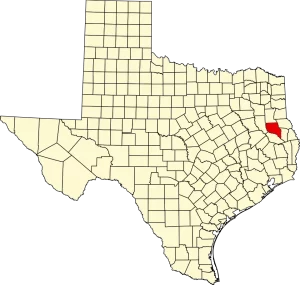
Córdova also cultivated alliances with disaffected Native leaders, most notably Chief Bowl of the Cherokee. While Bowl maintained formal relations with the Republic, the overlapping promises from both Mexican and Texan authorities created an environment of confusion and mistrust. Córdova promised Native allies land security and recognition if they joined an uprising against the Republic of Texas.
The August Uprising
The rebellion came to light in early August 1838. A group of Nacogdoches residents searching for stolen horses encountered a hidden encampment on the Angelina River and were fired upon. The attackers were part of a force of more than 100 armed Tejanos led by Córdova. Soon, reports came in that Native allies had joined their ranks, bringing the total number to nearly 400.
President Sam Houston, then visiting Nacogdoches, issued a proclamation on August 8 forbidding all unauthorized assemblies and ordering those bearing arms to disperse peacefully. Córdova and eighteen others responded with their own declaration: they had taken up arms to defend their rights and would do so to the death, asking only that their families be spared. Houston sought to avoid escalation, but the situation was spiraling.
General Thomas J. Rusk, ignoring Houston’s orders not to engage, mobilized militia forces from surrounding settlements. Major Henry W. Augustine led 150 volunteers in pursuit of the rebels. Though no major battle occurred, the uprising quickly collapsed as the rebels scattered. Córdova fled west with a small group of loyalists, attempting to reach safety in Mexico.
Mexican Involvement: The Miracle Expedition
The idea that Mexico had encouraged or even coordinated the Córdova Rebellion was not idle speculation. In July 1838, Julián Pedro Miracle, a Colombian-born officer and former liberal in the Mexican army, entered Texas from Matamoros. Acting under instructions from General Vicente Filisola, Miracle was tasked with forging alliances among Texas tribes and organizing a general uprising against the Republic.
Miracle met with Native leaders along the Trinity River and reportedly secured agreements for a coordinated campaign. On July 20, he formalized plans with several chiefs to begin hostilities. Before those plans could be implemented, Miracle was killed on August 20 near the Red River. On his body, Texan forces found letters from Filisola and other Mexican officers encouraging a united Native-Mexican offensive. His diary recorded meetings with Chief Bowl and confirmed that Córdova was acting in concert with broader Mexican strategy.
Battleground Prairie and the Collapse of the Plot
Though the core rebellion had ended by fall 1838, Córdova remained active. In March 1839, his forces reappeared near Seguin, likely in an attempt to regroup or incite a second wave of resistance. On March 29, General Edward Burleson led a force of 80 men that confronted and defeated the rebels at what would become known as Battleground Prairie. Córdova was wounded but escaped once again. He would not return to Texas until 1842, when he joined General Adrián Woll’s failed invasion of San Antonio. He died shortly thereafter at the Battle of Salado Creek.
Meanwhile, thirty-three suspected members of the rebellion were arrested and tried for treason. All had Spanish surnames. Due to fears of bias in Nacogdoches, their trials were moved to San Augustine County. Most were acquitted or had charges dropped, but one man, José Antonio Menchaca, was convicted and sentenced to death. After reports surfaced that the jury had been pressured, President Lamar pardoned him just days before his execution.
The Flores Documents and the Road to War
The clearest link between Mexico, Córdova, and Native resistance came in May 1839. Manuel Flores, a trader and Mexican agent long connected to the Caddo, had been dispatched from Matamoros under orders from General Valentín Canalizo. His goal was to deliver arms and correspondence to Tejano and Native allies across Texas.
Flores and his band killed four Texan surveyors near Seguin on May 14, drawing the attention of the Texas Rangers. On May 17, Lt. James O. Rice and his men intercepted Flores near the San Gabriel River and killed him in the opening charge. The Rangers captured mules, weapons, and Flores’s personal baggage—which contained letters from Mexican officers, including Canalizo, addressed to Córdova, Chief Bowl, and other leaders.
One letter urged that “rapid and well-concerted movements” be used to draw Texan forces in multiple directions, and that the enemy should not be given “any determinate object at which to strike.” Another promised land to Native allies and confirmed that a larger campaign to destabilize the Republic was underway.
Treaty Nullification and Cherokee Removal
At the heart of the fallout was the status of the Cherokee. In 1836, Sam Houston and John Forbes had negotiated a treaty granting them land between the Angelina and Sabine Rivers. The agreement was never ratified, and in 1837, the Texas Senate declared it null and void. Still, Houston had repeatedly reassured Chief Bowl that their land claims would be honored.
After the Flores papers surfaced, President Mirabeau Lamar was convinced that the Cherokee were complicit in the Mexican-backed conspiracy. He ordered their removal from Texas. In July 1839, Kelsey Douglass led a force of 500 men under Edward Burleson, Thomas Rusk, and Willis Landrum. They demanded Cherokee departure.
Though Chief Bowl initially agreed to negotiate, talks broke down over a clause requiring armed escort out of the Republic. On July 15, Texan forces attacked the Cherokee village. Bowl and over 100 others were killed in two days of fighting. The remaining Cherokee fled north, but many were pursued, captured, or killed in subsequent engagements.
A Turning Point in Texas Politics
Though the Córdova Rebellion was brief and ultimately unsuccessful, it left a lasting mark. In the eyes of many Anglo Texans, the discovery of Mexican support for the uprising justified both the expulsion the Cherokee and a broader crackdown on Tejano political activity. Racial and political mistrust deepened. The idea that Mexican agents could stir rebellion from within shaped public policy and military strategy for years to come.
By 1842, when Córdova reemerged with Woll’s troops, he was viewed not as a misguided civic leader but as a traitor and foreign operative. His death closed a chapter, but the fears and fractures exposed by the uprising would continue to define the Republic’s approach to internal dissent.
During the Jim Crow era, the Córdova Rebellion was often invoked by historians and educators as evidence of the supposed duplicity and hostility of Mexicans and Blacks, who were portrayed as willing to conspire against Anglo authority. A 1936 Texas Centennial marker at Battleground Prairie reflects this narrative: “Where 80 volunteers commanded by General Edward Burleson defeated Vicente Córdova and 75 Mexicans, Indians and Negroes, March 29, 1839, and drove them from Texas, ending the ‘Córdova Rebellion.’ 25 of the enemy were killed many volunteers were wounded, but none fatally.”
In the decades since, the uprising has received little sustained attention from scholars or the public, though recent interpretations have begun to explore the more complex motivations of its participants. These include local grievances against Anglo settlers, the politics of land and identity, and the influence of Mexico’s efforts to destabilize the young Republic. While the Mexican government did play a role in inciting or encouraging the revolt, the conflict was shaped just as much by regional tensions and competing visions of Texas’s future—making it a more nuanced and ultimately tragic episode than earlier accounts suggested.