Bob Bullock (1929–1999) was a dominant figure in late 20th-century Texas politics, best known for his long tenure as comptroller and as the state’s lieutenant governor from 1991 to 1999. A Democrat with a reputation for bluntness and deep institutional knowledge, Bullock wielded significant influence over fiscal and legislative matters for more than two decades.
Born in Hillsboro, Texas, Bullock earned his law degree from Baylor University and began his political career as a member of the Texas House of Representatives in the 1950s. He later served as Secretary of State under Governor Preston Smith.
In 1975, he was elected Comptroller of Public Accounts, a position he held for 16 years. During his time as Comptroller, Bullock modernized the agency, introduced computerized tax collection systems, and published detailed reports highlighting government waste and inefficiency. He was an early proponent of fiscal accountability and performance auditing in state government.
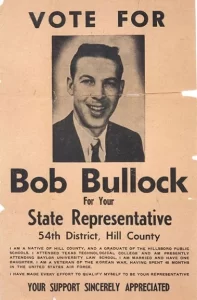
In 1990, Bullock was elected Lieutenant Governor. The office, widely considered the most powerful in Texas government due to its control over the Senate’s agenda and budget process, allowed Bullock to shape major policy decisions across party lines. He was reelected in 1994 with bipartisan support.
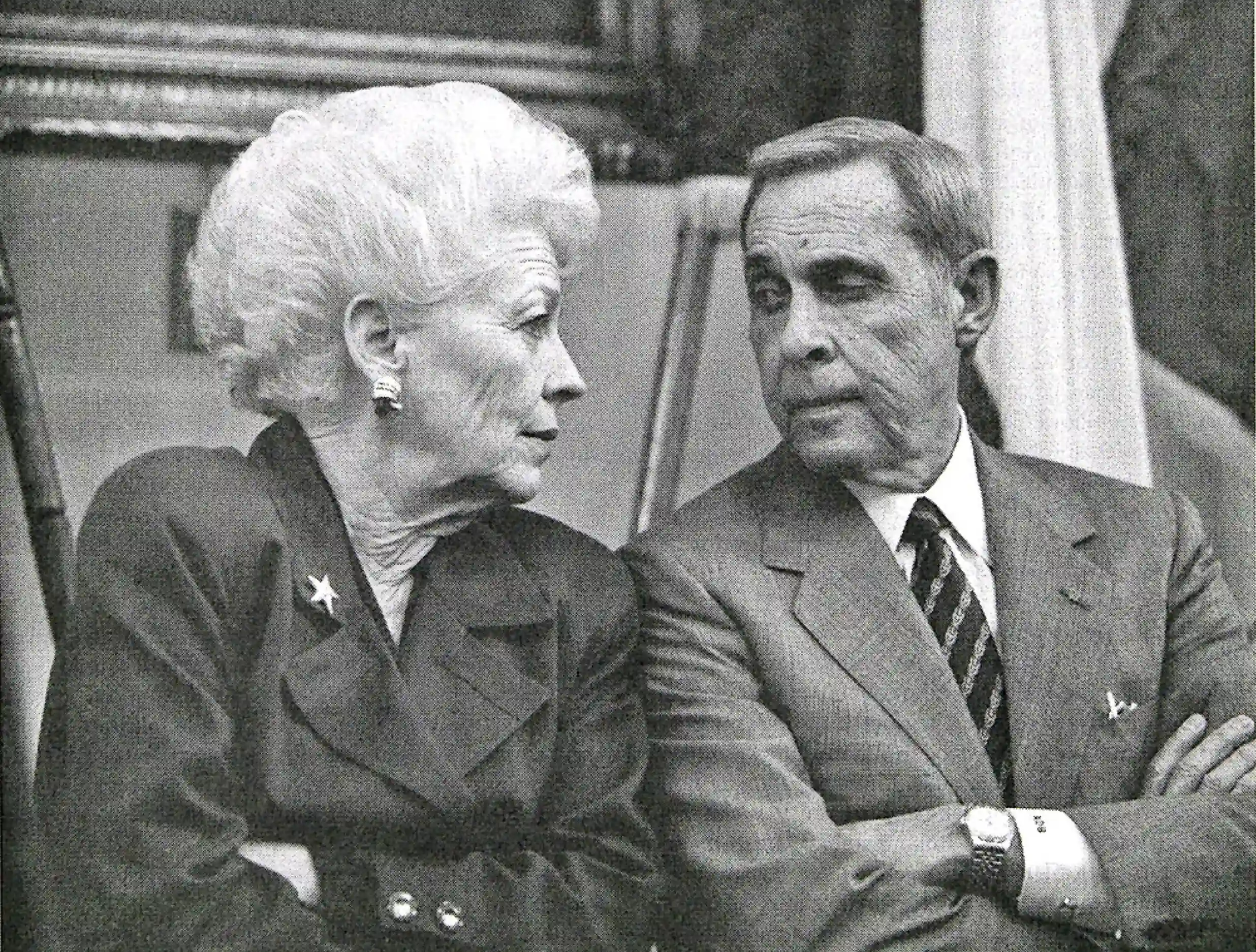
Bullock’s politics defied strict ideological categorization. Though a lifelong Democrat, he often embraced conservative positions on fiscal matters and law enforcement. He frequently clashed with Democratic Governor Ann Richards, while getting along much better with her Republican successor, George W. Bush.
Bullock was a strong supporter of tough-on-crime policies, including the death penalty, prison expansion, and anti-crime legislation. At the same time, he advocated for increased funding for public education and infrastructure, pushed through tax simplification measures, and protected the state’s Rainy Day Fund from political interference.
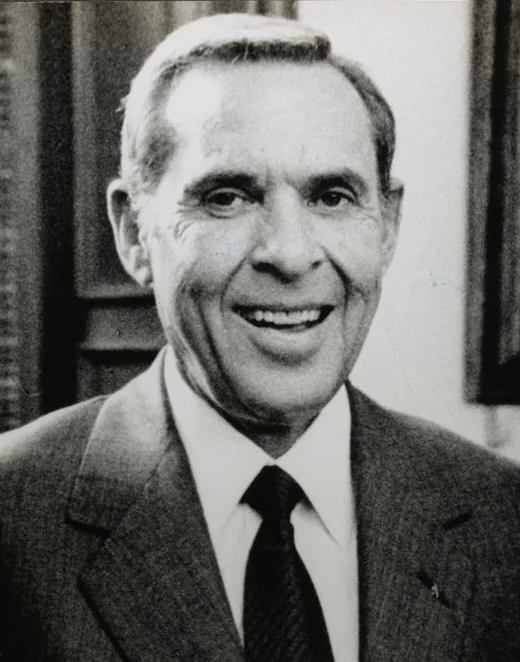
One of Bullock’s most consequential initiatives was the creation of the Texas Performance Review in 1991, which empowered the Comptroller to conduct cost-efficiency audits across state agencies. He also played a key role in overhauling the state’s ethics laws following the Sharpstown scandal fallout, supporting stricter financial disclosure requirements and campaign finance reforms. He backed the reorganization of the Texas higher education system, particularly strengthening the Texas State University System, and supported efforts to improve teacher pay and school accountability.
George N. Green, Professor of History at the University of Texas at Arlington, wrote that Bullock “forced a racist, inept state comptroller into retirement, and as comptroller himself he modernized a fossilized agency and his staff hit upon the idea of headline-making raids to seize the inventories of businesses that were cheating the state out of millions of dollars in sales taxes. As lieutenant governor in the 1990s he helped overhaul the 1907 business franchise tax and [the education finance system].”1
“Bullock constantly demanded immediate action—as soon as an idea struck him—which sometimes provided hilarious consequences. The story of Bullock’s Raiders, especially their first effort to seize a San Antonio liquor dealer’s enormous stock, is a classic of bureaucratic bungling. He was also a managerial slave driver, a manic depressive, a womanizer, and an alcoholic. At times his office was out of control, riddled with graft and the misuse of state property. His volcanic, shouting mood swings and cursing were legendary, and while he was comptroller and lieutenant governor no one in either party wanted to cross him. One joke was that his tongue should have been registered as a concealed weapon.”
In the 1990s, Bullock’s relationship with Republican Governor George W. Bush was cooperative, even though the two belonged to different parties. Bullock played a key role in Bush’s political ascent, which culminated in his two terms as U.S. president. The two men worked closely on education reform and tort reform during Bush’s first term.
Bullock resisted partisan gridlock and was known for threatening to punish senators who put ideology above governance. Though his authoritarian leadership style drew criticism, many credited him with preserving the Senate’s functionality during a period of increasing national polarization.
He began each legislative session by declaring “God bless Texas,” a phrase now inscribed in the Senate chamber. After choosing not to seek a third term, Bullock retired in 1999 and died of cancer later that year. Bullock was instrumental in the creation of the Texas State History Museum in Austin, which opened in 2001, and was named in his honor.
Less well known is that Bullock also wanted to change the official residence of the governor, located at the historic mansion near the capitol, to the large Pease Mansion, which is just over a mile west of the Texas Capitol in the Enfield neighborhood. The home, donated by former Governor Allan Shivers to the University of Texas, passed into the state’s hands before being sold to a private buyer in 2002, after Bullock’s death.
- George N. Green, review of Bob Bullock: God Bless Texas, by David McNeely and Jim Henderson, Southwestern Historical Quarterly 112, no. 3 (January 2009): 356–57. ↩︎
📚 Curated Texas History Books
Dive deeper into this topic with these handpicked titles:
- Bob Bullock: God Bless Texas
- Bill Hobby: A Life in Journalism and Public Service (2024)
- Let the People In: The Life and Times of Ann Richards
Texapedia earns a commission from qualifying purchases. Earnings are used to support the ongoing work of maintaining and growing this encyclopedia.