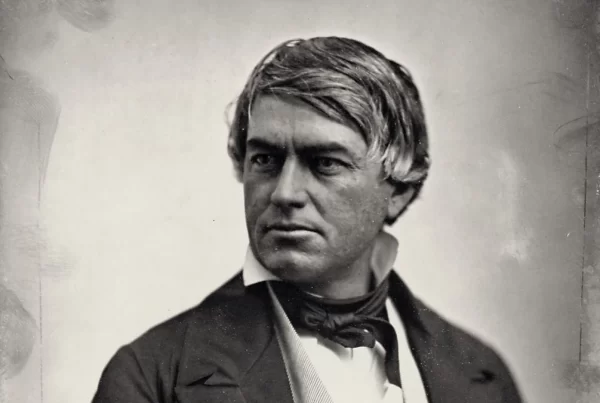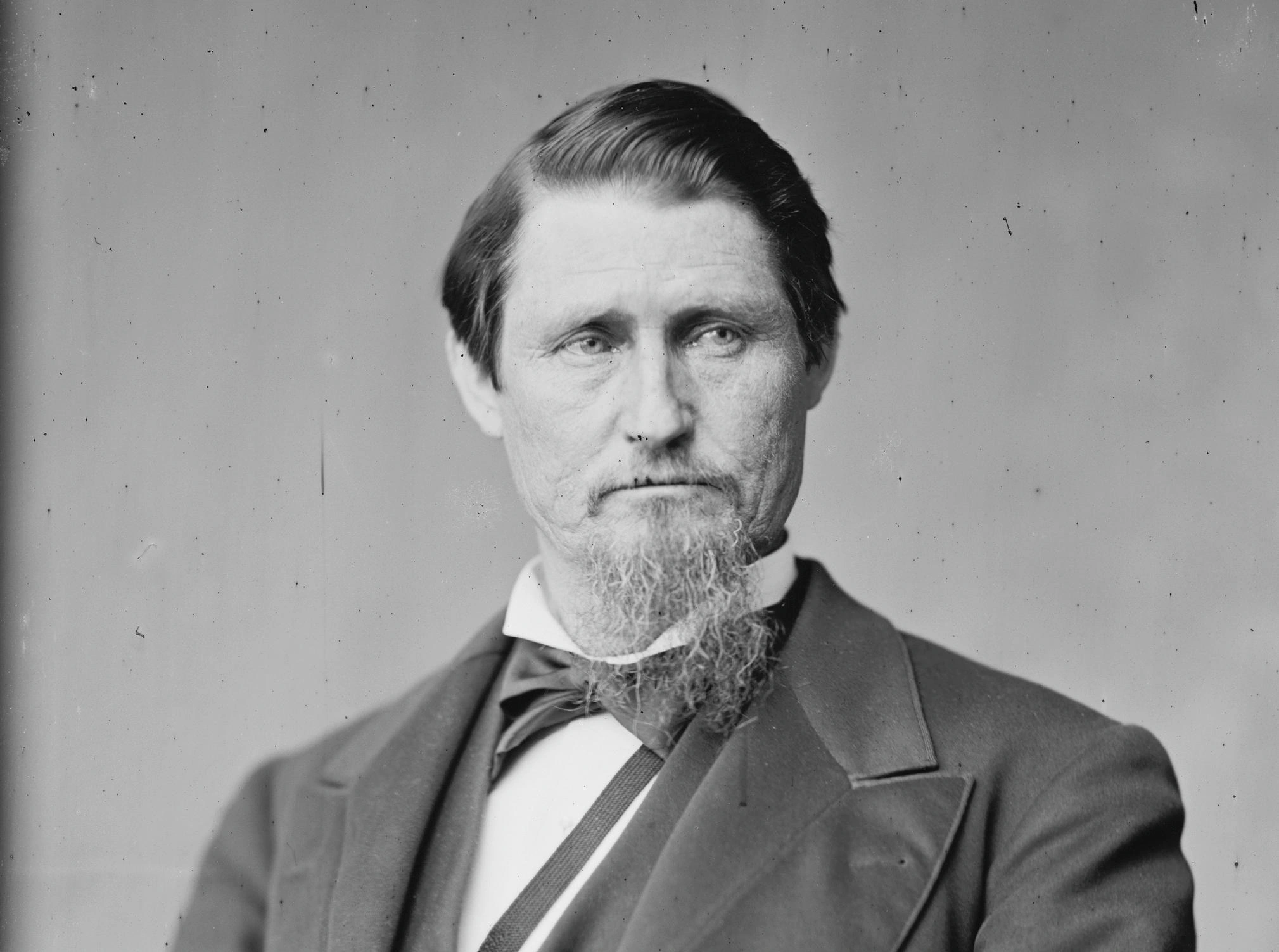
James Webb Throckmorton (1825–1894) entered Texas politics as a Whig, voted against secession in 1861, and later fought with the Texas State Troops defending the frontier. Elected governor in 1866, he sought to restore civil authority and resist federal overreach—only to be dismissed a year later by military order. His brief tenure exposed the fragility of postwar moderation and the collision between state sovereignty and federal Reconstruction policy.
His brief tenure as governor—cut short by military removal—reflected the profound tensions between state and federal authority during Reconstruction and the limits of moderate leadership in a polarized era.
Early Life and Antebellum Career
Throckmorton was born on February 1, 1825, in Sparta, Tennessee, and moved with his family to Collin County, Texas in 1841, as a teenager. Following in the path of his father and uncle, he studied medicine and began his career as a physician. He married Annie Rattan of Illinois, and with whom he had ten children.
Despite having a successful career in medicine, Throckmorton dissolved his practice and turned his attention to law and politics. In 1851, he entered the Texas Legislature as a die-hard member of the Whig Party, an allegiance that he had inhered from his father.
He served in the Texas House for three terms, gaining a reputation as a capable orator and pragmatic legislator. Following the dissolution of the Whig Party, Throckmorton joined the Democratic Party rather than the emerging Republican Party, which had little support in the South. He was elected to the Texas Senate in 1857.
Opposition to Secession
Though he was no abolitionist, Throckmorton opposed secession in 1861. On the eve of the U.S. Civil War, he was a delegate at the special secession convention held at the Texas Capitol from January 28 to February 1, 1861. Huge crowds packed the galleries and balcony of the Texas House chamber as the votes were taken on the final day of the convention. Historian T. R. Fehrenbach, who judged Throckmorton to be “immensely courageous politician,” described the scene:
“Seventy delegates voted for secession before a single “no” was registered. The first negative vote brought down jeers and catcalls from the gallery.
“Oldtime Whig James W. Throckmorton, of Collin County, rose and addressed the chair as his turn came. Throckmorton was a known Unionist. “Mr. President, in view of the responsibility, in the presence of God and my country—and unawed by the wild spirit of revolution around me, I vote ‘no!’
“This brought a feeble cheer from the Unionist minority, which was drowned out in a wave of hissing. Throckmorton, a tall, immensely courageous politician wearing a short beard, said in a voice that could be heard in the farthest corner: ‘Mr. President, when the rabble hiss, well may patriots tremble!’ Throckmorton sat down.
“The convention almost dissolved in disorder; the galleries screamed abuse; the chair and the delegates themselves shouted the mob down. Very few people in the hall agreed with Throckmorton, but he was known as an honorable man. The balloting continued. At its end, only seven men from all Texas joined Throckmorton.”1
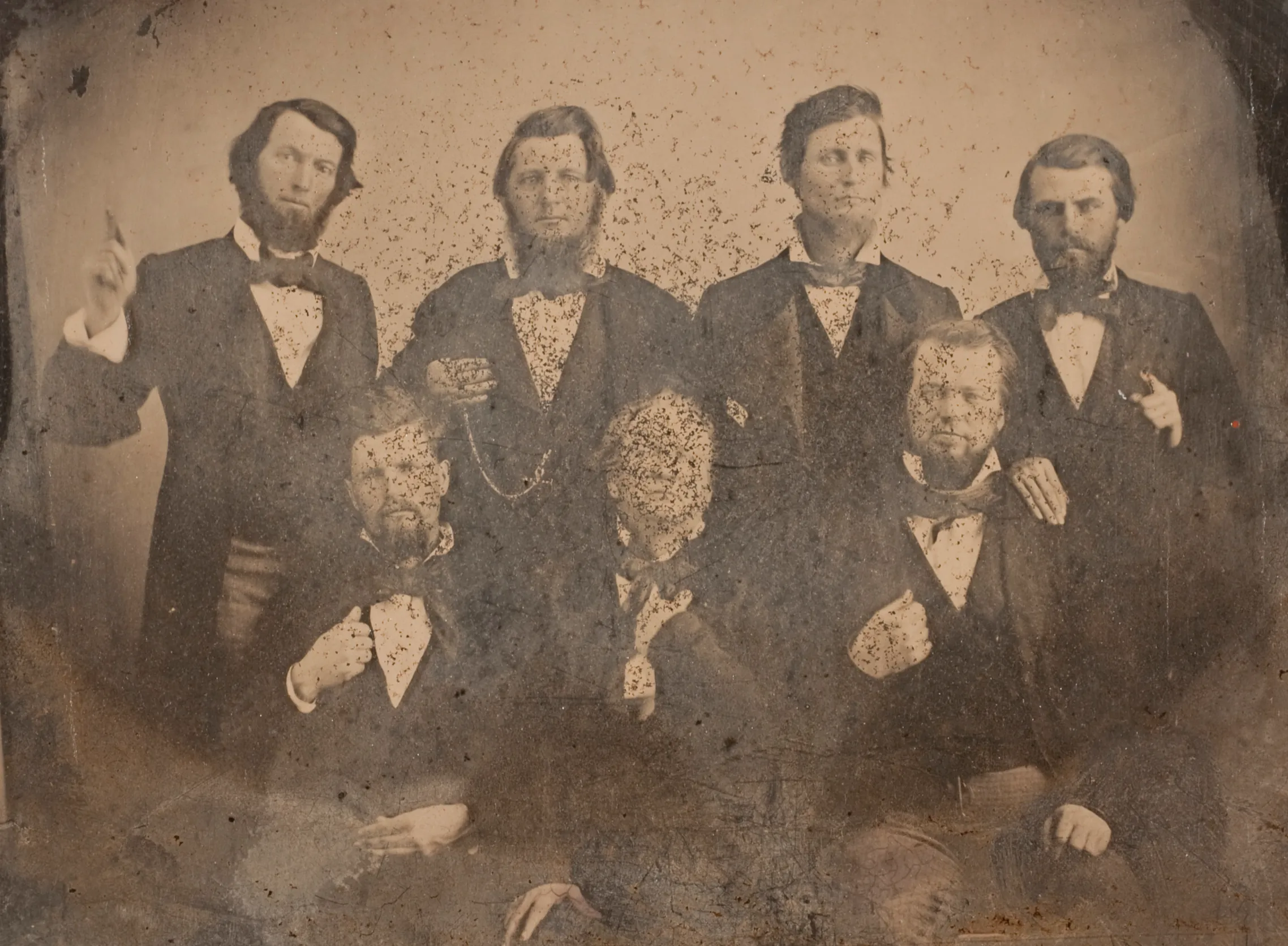
Several months later, the first fighting of the U.S. Civil War erupted between federal troops and the secessionist states. Throckmorton, despite having opposed secession, volunteered for military service. He served in the Texas state troops on the frontier, rising to the rank of brigadier general.
Postwar Politics and the 1866 Election
After the Confederacy’s defeat, Throckmorton supported reintegration with the Union but opposed radical federal intervention and punishment of the Southern states. In 1865–66, he emerged as a compromise candidate for governor, a figure who had credibility with Republicans and Democratic Unionists for having opposed secession, and with former Confederates because he had fought in the war (albeit in the Texas Frontier Regiment, not in the Confederate States Army). He participated in the 1866 constitutional convention and was elected governor in a landslide that summer, taking office on August 9, 1866.
Throckmorton’s mandate came from Texans who wanted to restore civil government under President Andrew Johnson’s lenient Reconstruction policy while resisting Congressional demands for racial equality and expanded federal oversight. As governor, he sought to reestablish law and order, support economic recovery, and resume Texas’s place in the Union with minimal federal interference.
Addressing Lawlessness
The legislature met for the first four months of Throckmorton’s year-long tenure, and not at all thereafter. One innovation that he proposed was a tax on firearms carried in public—a measure intended to rein in the rampant crime and violence that had engulfed Texas at the end of the war. While conceding that an outright prohibition against the public carrying of weapons was unconstitutional, he considered the Second Amendment was “most wretchedly abused.”
“While I would not seek to interfere with the right of the citizen, at all times, to bear arms in defence of himself, his property and the State, yet I do not conceive that it was intended by the Constitution to convey the idea that men and boys, vagabonds and vagrants, were to be licensed to have arms about their persons on all occasions. Such things are to be met with every day in the peaceful walks of life among the most quiet communities, at church and at the school house. A law prohibiting it might not be constitutional, and perhaps would not be proper, but it appears to me that a tax should be levied upon all pistols and weapons carried about the person, and the right given to the Assessor, upon failure to pay such license, to seize upon the arms and sell them for the taxes. Any person who felt constrained to wear a weapon, of this sort, for his personal protection, would not think it a hardship to pay the tax, and it would, perhaps, have the effect to prevent thoughtless youths and others who bear them for show or other purposes, to dispense with such useless ornaments. As a matter of course, such tax should not apply to persons living on the frontier or to travelers.”2
This was one of the first statewide gun control laws proposed in 19th century Texas. The Texas House took up Governor Throckmorton’s proposal, but lawmakers could not agree on the amount of the tax and whether it should vary based on the type of weapon carried. They settled instead for a law that prohibited discharging firearms in urban areas.3 Though Throckmorton’s proposal failed, it presaged a more sweeping gun control law passed in 1871.
Racial and Civil Rights
Throckmorton accepted the abolition of slavery and nominal civil rights for freedmen but resisted Black suffrage, military control of elections, and the use of federal troops in local affairs. His administration reinstated many former Confederates to positions of authority and maintained a legal system heavily biased against African Americans and Union sympathizers.
In his public remarks, Throckmorton evinced a paternalistic and implicitly racist attitude toward the recently freed slaves. He said in his inaugural address,
“In the administration of the affairs of the State, it shall be my constant endeavor to recommend and aid in carrying out such measures as will insure exact justice to all classes of men, of every political faith, religious creed, race and color. The changed relations, so suddenly brought about, of the white and black races, will require of us much thoughtful consideration. It is a duty we owe alike to ourselves and to humanity, to enact laws that will secure the freed people the full protection of all the rights of person and property guaranteed them by our Amended Constitution. The day is not far distant, in my judgment, when the black people will be convinced that their truest friends are those with whom they have sported in youth, and who have cared for them from their infancy. I shall give the subject the closest attention, and shall not fail, from time to time, to make such suggestions as experience may dictate, in order to render this class of our population useful to themselves and the country.”4
Throckmorton favored instituting limited legal protections from freedmen while overseeing the passage of a series of laws known as the Black Codes. Though soon repealed or rendered unenforceable by later Reconstruction authorities, they prefigured the later Jim Crow laws. The Black Codes restricted the labor and mobility of freed persons through a vagrancy law, labor code, a lien law, an apprenticeship statute, and other measures. Collectively, these laws relegated the still impoverished freedmen to a status of dependence on White landlords and employers, subject to strict social and economic controls.
Though Throckmorton alone was not responsible for these Black codes—the legislature broadly supported them, following the example of other states—he clearly shared the racial biases of his Confederate contemporaries (despite having been a unionist), and he played a role in their passage. One historian described Throckmorton as “perhaps the most racially reactionary of all the Presidential Reconstruction governors.”5
In the meantime, Throckmorton called for the removal of federal military forces from Texas and the U.S. Freedmen’s Bureau, which was working to help freed slaves economically and educationally, and playing a role in protecting Black civil rights. Barry A. Crouch, Professor of History at Gallaudet University and the author of The Freedmen’s Bureau and Black Texans, expressed searing criticism of Throckmorton’s governorship, saying,6
“Throckmorton was neither as politically astute as past and present historians have made him out to be nor as dedicated to protecting Unionists and blacks as some writers have suggested. A basically mean-spirited individual who laid the blame for Texas’s troubles on the Republicans, he made little attempt to influence the legislature. By complaining that he had no control over their deliberations and capitulating to their actions in regard to black Texans, Throckmorton did not understand the depth of Northern emotion which paved the way for his removal a year later. His unwillingness to compromise and his deeply ingrained bias against blacks assured that the legislature would enact a black code as severe as those passed by other states in 1865.”
The governor signed or allowed to pass into law all of the Black Codes, while vetoing seven other bills, including a bill granting land to railroads. Although Throckmorton favored subsidizing certain main rail lines, he considered indiscriminate subsidization of railroads through generous land grants to be a waste of state resources. He stated in a message to the legislature, “The State, in my judgment, should now concentrate all resources upon a few main lines penetrating the interior portions of the country, and leave all minor roads to take care of themselves. When these main lines are constructed, and the population and wealth of the State has increased so as to justify, other roads will succeed, and not before.”7
Removal from Office and Federal Intervention
Governor Throckmorton’s approach to civil rights soon drew criticism from Congressional Republicans in Washington, who sidelined and subsequently impeached President Andrew Johnson, and gained gained control of Reconstruction policy.
Known as “Radical Reconstructionists,” this faction of the Republican Party viewed Throckmorton’s administration as obstructionist. In March 1867, Congress passed the Reconstruction Acts, placing the former Confederate states under military rule and requiring new state constitutions with provisions for Black suffrage and civil rights enforcement.
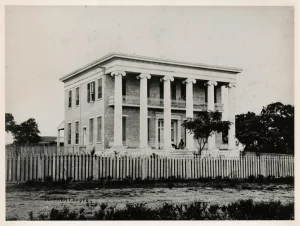
Texas was placed under the command of General Philip H. Sheridan, commander of the Fifth Military District. On July 30, 1867, Sheridan issued Special Order No. 91, calling Throckmorton an “impediment to Reconstruction” and removing him from office. He replaced him with Elisha M. Pease, a more cooperative Unionist and former governor.
Throckmorton denounced the action as unconstitutional and authoritarian, but he had no recourse under the terms of the Reconstruction Acts of 1867, which granted military commanders wide discretion to override or remove civil officials. Throckmorton’s removal marked a turning point in Texas politics, as power shifted decisively toward Republicans who were determined to remove ex-Confederates from office and remake Texas society, which still bore many hallmarks of the pre-war plantation economy.
Later Career and Return to Congress
After his removal, Throckmorton returned to legal practice and maintained a strong political base in North Texas. He was elected to the U.S. House of Representatives in 1874 as a Democrat, part of the broader “Redeemer” movement that aimed to roll back the policies of Reconstruction and restore white Democratic control in the South.
He served multiple terms in Congress between 1875 and 1887, gaining seniority and influence on matters related to land, frontier development, and Indian affairs. His voting record reflected his moderate but segregationist outlook—supporting limited civil rights while opposing federal intervention in state affairs.
Throckmorton remained active in Democratic Party politics into the 1890s but gradually faded from the spotlight. He died on April 21, 1894, in McKinney, Texas, and was buried in Pecan Grove Cemetery.
Political Legacy
James W. Throckmorton short-lived governorship highlighted the impossibility of satisfying both federal requirements and White Southern expectations during early Reconstruction. While he advocated for legal order and limited reconciliation, his refusal to support the political empowerment of freedmen placed him at odds with the direction of national policy.
In the view of many White Texans at the time, Throckmorton was a principled and pragmatic leader. But from the perspective of Reconstruction advocates, he was an obstacle to racial justice and reform. Today, Throckmorton County, located west of Fort Worth, bears the name of this controversial governor.
Sources Cited
- T. R. Fehrenbach, Lone Star: A History of Texas and the Texans (1968; reprint, New York: Open Road Media, 2014), 304. ↩︎
- “Governor’s Message,” Journal of the Texas House of Representatives, September 3, 1866, pg. 199-200. ↩︎
- Brennan G. Rivas, “An Unequal Right to Bear Arms: State Weapons Laws and White Supremacy in Texas, 1836-1900,” Southwestern Historical Quarterly 121, no. 3 (January 2018): pg. 285. ↩︎
- Inaugural Address, Journal of the Texas House, August 9, 1866, pg. 23. ↩︎
- Michael W. Fitzgerald, review of Texas Confederate, Reconstruction Governor: James Webb Throckmorton by Kenneth Wayne Howell, and Edmund J. Davis of Texas: Civil War General, Republican Leader, Reconstruction Governor by Carl H. Moneyhon, The Journal of the Civil War Era 1, no. 1 (March 2011): 126–129, https://muse.jhu.edu/pub/12/article/417327. ↩︎
- Barry A. Crouch, “’All the Vile Passions’: The Texas Black Code of 1866,” Southwestern Historical Quarterly 97, no. 1 (July 1993): pg. 22. ↩︎
- Journal of the Texas House, August 9, 1866, pg. 705-707 ↩︎
📚 Curated Texas History Books
Dive deeper into this topic by purchasing any of these handpicked titles:
- Texas Confederate, Reconstruction Governor: James Webb Throckmorton
- Edmund J. Davis of Texas: Civil War General, Republican Leader, Reconstruction Governor
- The Personal Memoirs of Ulysses S. Grant: The Complete Annotated Edition
As an Amazon Associate, Texapedia earns a commission from qualifying purchases. Earnings are used to support the ongoing work of maintaining and growing this encyclopedia.