Election and Legal Challenge
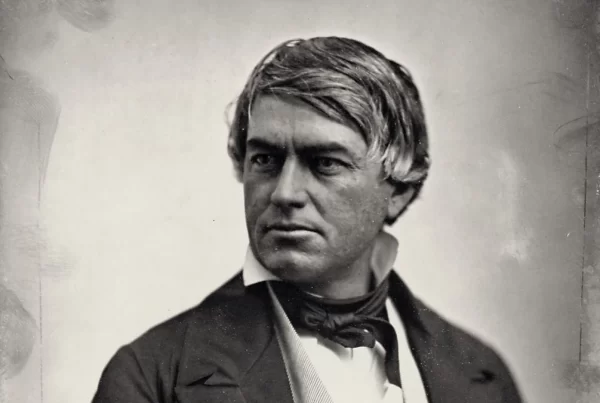
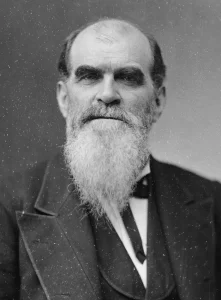
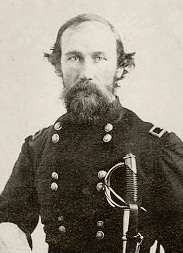
The 1873 Texas governor election took place against the tense backdrop of Reconstruction politics and public backlash against Republican rule. Incumbent Governor Edmund J. Davis, a Radical Republican and Union loyalist, faced off against Richard Coke, a former Confederate officer and Democrat. Davis had governed since 1870 under a new state constitution, backed by federal power, centralized authority, and support from Black voters and Unionists. But by 1873, that support had eroded.
On December 2, 1873, voters turned out in large numbers, especially in rural and Democratic-leaning counties. Preliminary returns showed Coke defeating Davis by an overwhelming margin—about 85,000 to 42,000 votes. The result was not simply a victory for a single candidate, but a repudiation of Republican control in Texas. Democrats claimed a mandate to “redeem” the state, a phrase used throughout the South to describe the end of Reconstruction governments.
But Davis and his allies were not ready to relinquish power. On December 12, the Republican-controlled Texas Supreme Court intervened in a case known as Ex parte Rodriguez—informally remembered as the Semicolon Court case.
Although many contemporaries viewed it as a contrived case brought to block the Democratic victory, the court declared the election invalid because, under the 1869 Texas Constitution, polls were required to remain open for four days at county seats—but the 1873 vote had been held in precincts for just one day. The justices, seizing on a semicolon in the constitutional clause, held that this deviation rendered the election unconstitutional. Though the ruling was never enforced, it gave Davis a temporary legal pretext to challenge the result and triggered the dramatic Coke vs. Davis power struggle at the Capitol.
Capitol Confrontation
In January 1874, Texas found itself with two rival governments claiming authority. Despite the overwhelming popular vote for Richard Coke, Governor Edmund J. Davis refused to vacate office, citing the Semicolon Court ruling that had declared the election unconstitutional.
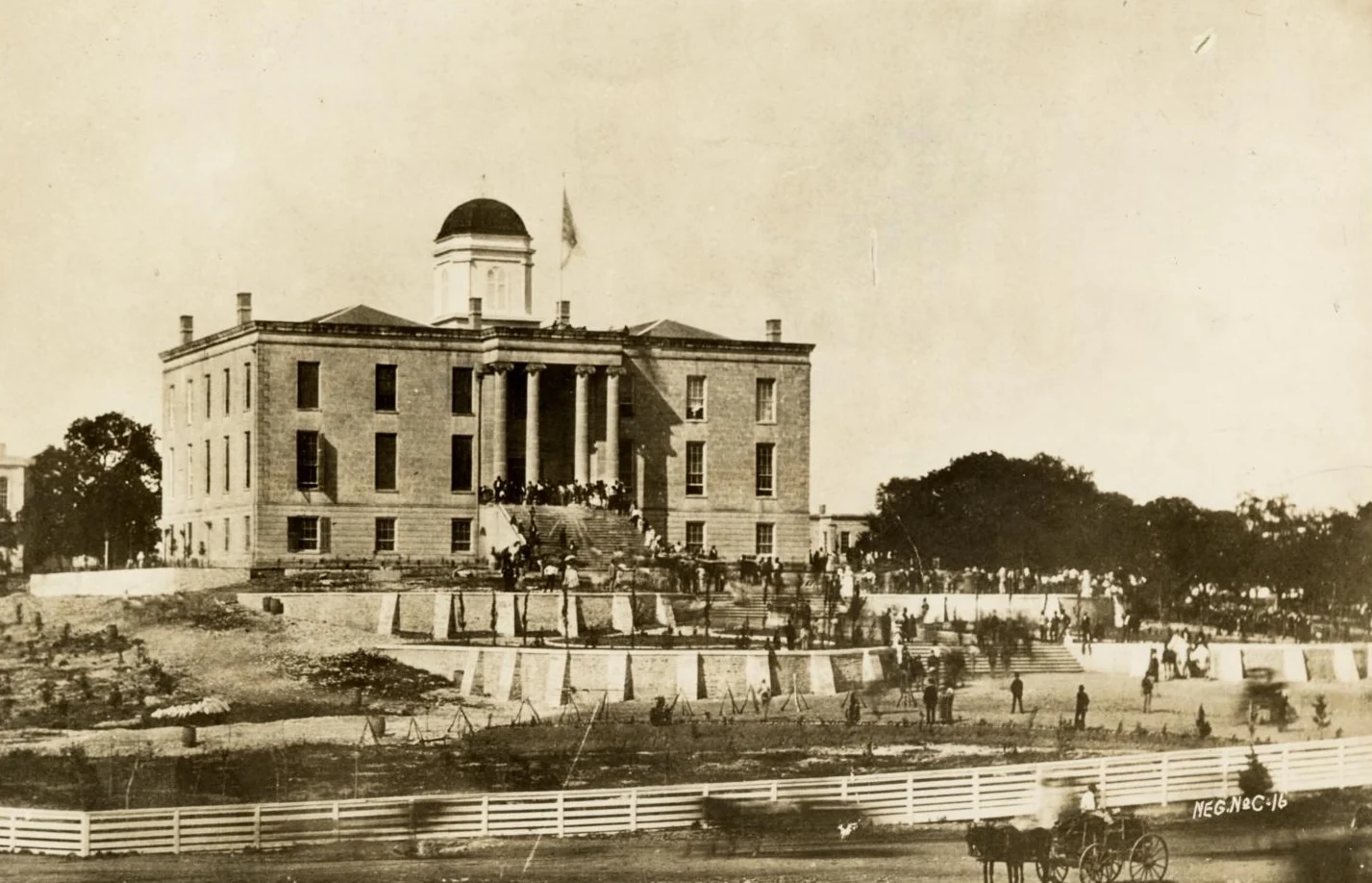
Coke and his allies rejected the ruling as illegitimate. On January 15, the newly elected Democratic legislature convened in the Capitol and declared Coke the rightful governor. Meanwhile, Davis remained barricaded on the third floor, still occupying the Governor’s Office and refusing to concede (this was the second Texas State Capitol, pictured top; located on the same site as the current capitol, it burned down in 1881). He requested federal military intervention from President Ulysses S. Grant to enforce the court’s decision and retain control.
Grant’s refusal to intervene proved decisive. Without federal backing, Davis could no longer rely on the authority that had upheld Republican rule throughout Reconstruction. Tensions escalated as armed Democratic supporters, including veterans and local militia, surrounded the Capitol. Inside, Davis’s appointed police force held key stairwells and entry points. The building became a pressure cooker: two governments operating under one roof, each claiming legitimacy, each surrounded by supporters prepared for a confrontation.
Over several days, the balance of power shifted visibly. Davis’s forces grew demoralized. Several officers refused to carry out his orders, and reports suggest some members of his own administration privately advised him to step down. Meanwhile, Coke took the oath of office, issued proclamations, and began appointing new officials from his own headquarters in the building’s lower floors.
On January 19, 1874, Davis accepted defeat. He quietly left the Capitol, giving a final statement to the press that warned, “The end of this usurpation will be the end of free government in Texas.”
Aftermath and Significance
The Coke vs. Davis dispute was the final rupture of Reconstruction-era governance in Texas. Coke’s inauguration marked the beginning of Democratic dominance that would last unbroken for over a century. Radical Republican reforms, including were rolled back in the years that followed, and the new Democratic administration embarked on significant restructuring, culminating in the constitution of 1876.
The disputed election also became a defining moment for the national trajectory of Reconstruction. It demonstrated that, without federal enforcement, Southern Republican governments could no longer survive. In Texas, this translated into a long period of segregationist policy, diminished Black political participation, and one-party rule.
The infamous ‘Semicolon’ ruling also had lasting impacts on the judiciary, contributing to the decision at the 1875 constitutional convention to make all judicial offices elective rather than appointive. It also likely contributed to the development of Texas’ unique system of bifurcated appeal, which divided the work of the Supreme Court among two high courts.
The backlash to the ruling illustrates the occasional limits of judicial power, and has provoked debates around the reasoning of the case itself, and the circumstances of it. For instance, constitutional scholar James Haley has described the ruling as “a naked act of political loyalty.” On the other hand, some modern interpreters have pointed out that the court followed strict constructionist logic—common in 19th-century jurisprudence—and faulted the legislature for drafting a statute that was poorly worded and unclear.
Whatever the correctness of the ruling, it ultimately escalated the 1873 Coke–Davis dispute, and the standoff at the state capitol. In the end it was the will of the people, backed by armed resolve, that determined the outcome. The 1873 election and its chaotic aftermath closed the door on Reconstruction, one of the most contested and transformative periods in Texas history.