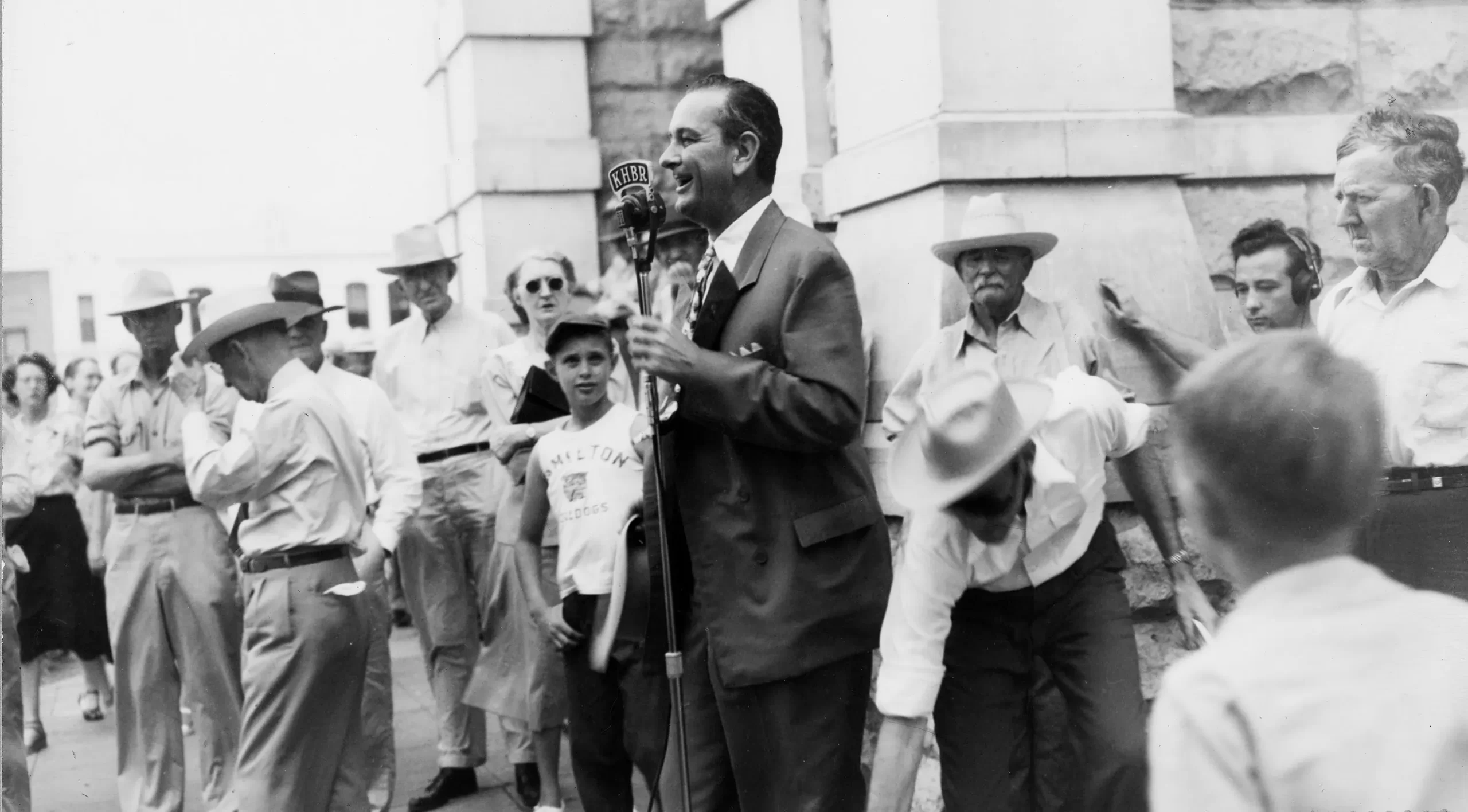
In 1948, Lyndon B. Johnson narrowly won the Democratic nomination for U.S. Senate in Texas—a victory that would serve as the foundation for his ascent to national power. The runoff against former Governor Coke Stevenson became one of the most disputed elections in Texas history, marked by intense regional divides, bitter accusations, and razor-thin margins. Stevenson, who had served as governor from 1941 to 1947, was popular with rural and conservative Democrats, while Johnson drew support from labor, minorities, and urban political machines.
In the August 28 runoff, Stevenson led in the publicly reported totals on election night and continued to hold a narrow advantage as additional precincts reported over the following days—until late returns from South Texas counties shifted the lead to Johnson. When the final tally was certified by the Texas Democratic Executive Committee (TDEC), Johnson led by just 87 votes out of nearly a million cast, a result that immediately raised suspicions among Stevenson supporters.
Rising Star vs. Old Guard
By 1948, Lyndon B. Johnson had already spent more than a decade building his political career. He began in state politics as a legislative aide and briefly served as a secretary to a Texas state senator before winning election to Congress in 1937 as the U.S. Representative for Texas’s 10th District. Earlier, he had also worked with the Texas National Youth Administration under President Roosevelt’s New Deal, which strengthened his ties to federal power and progressive politics. Known for his relentless ambition and talent for coalition-building, Johnson had unsuccessfully sought a U.S. Senate seat in 1941. That loss shaped his approach to electoral politics and deepened his reliance on South Texas political networks—relationships that would become central to his 1948 campaign.
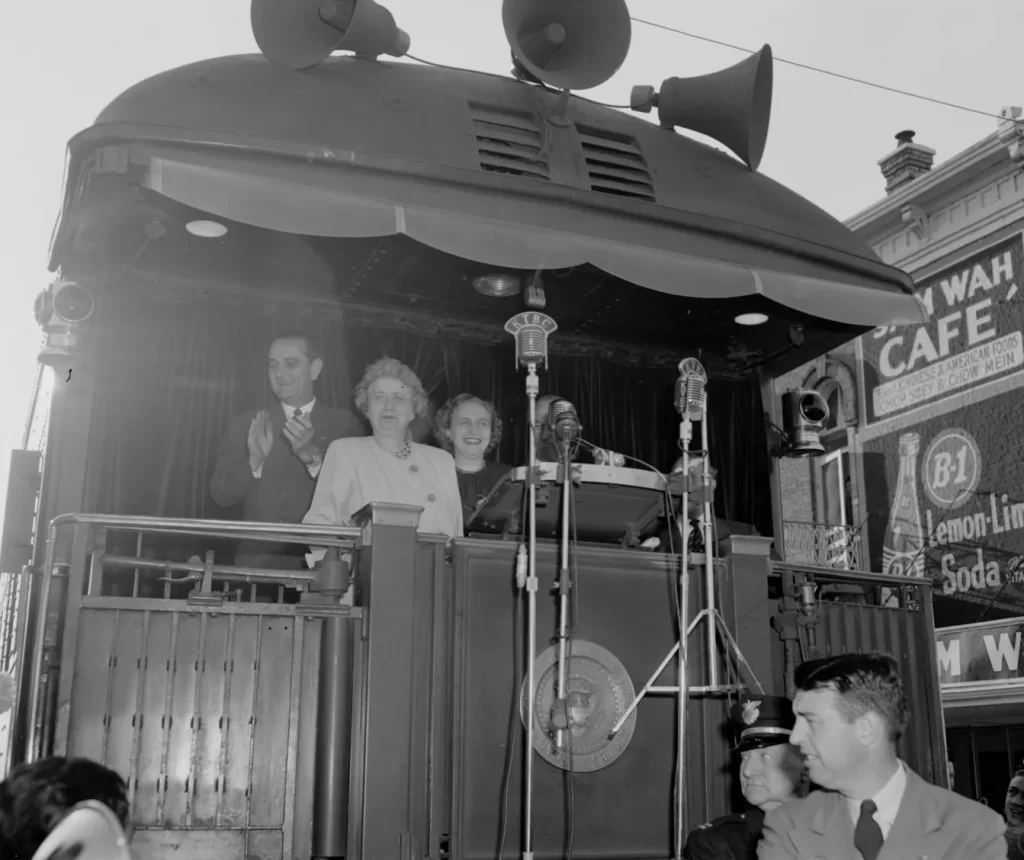
Coke Stevenson, by contrast, embodied the traditional conservative wing of the Texas Democratic Party. A former speaker of the Texas House and lieutenant governor, Stevenson served as governor from 1941 to 1947, earning a reputation for fiscal restraint, administrative efficiency, and personal integrity. Deeply rooted in rural West Texas, he was widely respected among old-guard Democrats and often portrayed as a symbol of honest, small-government leadership. Unlike Johnson, Stevenson disdained overt politicking and ran a subdued campaign based more on his record than on organization or rhetoric—a contrast that sharpened the stakes of the 1948 runoff.
Allegations and Legal Challenges
The most infamous element of the 1948 Texas Senate race centered on “Box 13,” a ballot box from Jim Wells County, Precinct 13. Johnson gained an additional 202 votes from this precinct in the final count, all added after the initial returns. These votes were highly uniform—reported in alphabetical order, cast at the end of the day, and almost exclusively for Johnson. This sudden bump provided the margin Johnson needed to overtake Stevenson.
The Jim Wells County Democratic machine, controlled by political boss George Parr—known as the “Duke of Duval”—played a central role in delivering these late returns. Parr and his allies had long dominated South Texas politics through patronage networks, economic leverage, and control of local election officials. Testimony from poll watchers and county clerks in the weeks after the election suggested irregularities, including allegations that the voter list for Box 13 had been altered or padded with fictitious names.
Stevenson sought an injunction in federal court, claiming the election was stolen and demanding that the results be overturned. Although the case drew national attention, the federal courts declined to intervene, ruling that the dispute was an internal party matter. The TDEC, controlled by Johnson loyalists, upheld the result.
Eventually, the U.S. Supreme Court declined to hear the appeal, allowing Johnson’s name to remain on the general election ballot. He went on to win unopposed in November, as was typical for Texas Democrats at the time.
Role of Political Machines and South Texas Bosses
Johnson’s 1948 runoff victory showcased the enduring power of Texas political machines in the mid-20th century. In particular, South Texas counties with strong patron-client relationships—such as Duval, Jim Wells, and Starr—were instrumental in delivering late-reporting vote totals that favored Johnson. These counties often had minimal press oversight, centralized authority in the hands of party bosses, and long histories of controlled turnout.
George Parr had previously aided other Texas Democrats, including Johnson in his earlier House races. While no court ever found Johnson personally responsible for fraud, his campaign’s coordination with local operatives in these counties raised persistent questions about the boundaries between machine politics and outright manipulation. Some historians later pointed to the 1948 race as a defining moment that demonstrated Johnson’s willingness to push procedural and ethical limits in pursuit of power—though Johnson himself consistently denied any wrongdoing.
Legacy in Texas Politics
The fallout from the LBJ Box 13 controversy lingered for decades. While Johnson’s national reputation eventually overshadowed his early Senate victory, many in Texas political circles—especially supporters of Coke Stevenson—never accepted the legitimacy of the 1948 result. The episode hardened divisions within the Texas Democratic Party and contributed to long-standing distrust between reformers and the entrenched establishment.
Johnson’s Senate win proved decisive for his career. It catapulted him into a position of national influence, leading to his appointment as Senate Majority Leader by 1955 and eventually to the vice presidency and presidency. The 1948 Texas Senate race also marked one of the last gasps of overt machine influence in statewide Democratic politics. While political bosses like Parr retained local control into the 1950s, growing public scrutiny, media attention, and legal reforms gradually diminished their influence.
Though the allegations surrounding Box 13 were never legally proven, the facts surrounding the last-minute vote shift remain among the most scrutinized in American electoral history. The controversy endures as a touchstone in discussions of election integrity and the blurred lines of democratic legitimacy in midcentury Texas politics.
📚 Curated Texas History Books
Dive deeper into this topic by purchasing any of these handpicked titles:
- The Years of Lyndon Johnson: The Path to Power
- The Years of Lyndon Johnson: Full Biographical Series
- Dukes of Duval County: The Parr Family and Texas Politics
As an Amazon Associate, Texapedia earns a commission from qualifying purchases. Earnings are used to support the ongoing work of maintaining and growing this encyclopedia.